
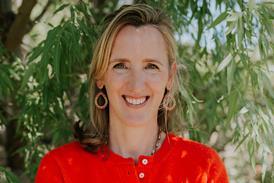





Ann-Louise Graham explores how Christians can respond to overwhelming suffering and injustice without becoming paralysed by guilt or crushed by the sheer scale of the world’s problems. In an age of constant bad news, she asks whether faithfulness means recognising that while we cannot fix everything, we can respond to the opportunities God places in front of us.
Have you ever been tempted to turn off the notifications on your phone or simply unsubscribe from certain news feeds? I know I have. There are ongoing wars and conflicts in Sudan, Ukraine, Gaza, Iran, the Democratic Republic of Congo, Myanmar and South Sudan, as well as devastating disasters, including the earthquake in Indonesia, wildfires in Europe and extreme weather across Asia.
Recently, I turned off notifications from a couple of subscriptions, not because I am uninterested in the information and not because I don’t care, but because I find myself increasingly overwhelmed by the suffering and injustice I see everywhere.
Yes, I can sign a petition. Yes, I might be able to post about something that troubles me. But is that enough? And, perhaps more importantly, how do I know what I am actually supposed to do as a Christian?
READ MORE: After Japan’s latest earthquake, where is God? Finding hope in the midst of disaster
You don’t need me to tell you that, before breakfast, if you want to, you can have almost unlimited information pumped into your phone, and into your mind and nervous system. Abuse, tragedy, shootings, stabbings, trafficking, rape. It is endless. News used to be something a family might have watched together once a day. Now there is an endless stream of it on our phones. The world has shrunk, and with it has come the potential for constant proximity to suffering and injustice.
But it isn’t just the volume of information that is overwhelming. It is my limited capacity to respond to things that could be on the other side of the world. And even in our own country, some problems can feel unsolvable.
READ MORE: ‘I found a Bible beneath the rubble’: Finding hope after Venezuela’s devastating earthquake
I don’t want to be uncaring. “Don’t look away,” people write. Beneath so much of what we consume, there seems to be an implicit question: You know about it—so what are you doing about it? I don’t want to be defeated by the injustice I see, and I am sure you don’t either. So how do we respond as Christians to the suffering and injustice around us without being drowned by it? Scripture leaves us in no doubt that God cares about justice and that his people cannot be indifferent to wrongdoing. We are told, for example, to “seek justice, correct oppression” [Isaiah 1:17], to speak for those who cannot speak for themselves [Proverbs 31:8–9] and “to do justice, and to love kindness” [Micah 6:8].
But before we decide how to respond to injustice, perhaps we need to ask what the Bible actually means by it.
But before we decide how to respond to injustice, perhaps we need to ask what the Bible actually means by it. Not everything our culture describes as an injustice is necessarily what Scripture calls injustice. At its simplest, biblical justice is rooted in the character and standards of God. It involves treating people rightly and impartially, giving people what is rightly due to them, and refusing to exploit, defraud or oppress others, particularly those who are vulnerable. At times, Christians can appear to pull in opposite directions. In some quarters, the gospel can seem almost synonymous with social action; in others, the emphasis falls exclusively on a person’s eternal destiny.
However, recognising an injustice and having personal responsibility to remedy it are not necessarily the same thing. Perhaps, then, I need to ask a smaller question: what opportunities has God actually placed in front of me and, perhaps, you? Galatians 6:10 tells us: “As we have opportunity, let us do good to everyone.” Proverbs 3:27 similarly tells us not to withhold good “when it is in your power to do it.” Those qualifications matter. As we have opportunity. When it is in our power.
The baptised Jew: A life of faith shaped by Israel, war and surrender
I certainly don’t mean for this to sound like a get-out clause. But perhaps it can help focus our attention and effort. There are people I can counsel, causes I can support, money I can give, words I can write and neighbours I can love. Your opportunities will look different from mine. Perhaps the answer is to turn our concern into concrete goals and actions.
C. S. Lewis identified something remarkably similar long before the arrival of smartphones and social media.
C. S. Lewis identified something remarkably similar long before the arrival of smartphones and social media. Reflecting on the rapid spread of news, he wrote: “I doubt if it is the duty of any private person to fix his mind on ills which he cannot help.” He even suggested that doing so could become “an escape from the works of charity we really can do for those we know.”
It is tempting to want to close the loop—in my own head and heart, and perhaps in yours too. I want everything tied up neatly so that I don’t have to feel agitated by what I see. But perhaps some of that agitation is supposed to remain. Not as guilt that paralyses us, but as compassion that moves us towards faithful action when God gives us the opportunity.
And then we have to trust God with what remains beyond our reach or ability. Perhaps faithfulness in an age of overwhelming global injustice means refusing both indifference and the illusion that everything depends upon us.