






Writer and researcher Dr Rhiannon McAleer has spent years exploring the intersection of motherhood, faith and identity. Drawing on groundbreaking new research from Theos and Bible Society, she reveals how becoming a mother can profoundly reshape not only a woman’s life, but also her understanding of God.
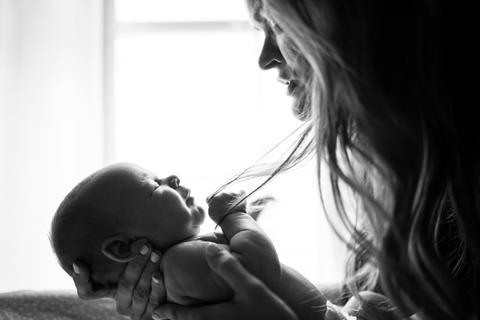
Photo by Zach Lucero on Unsplash
No mother needs to be told that having children is life changing. Physically, our bodies tell this story: pregnancy, breastfeeding, broken nights, the aches and pains of lifting increasingly heavy little people and carrying all their stuff – all these tell of change from one way of being to another. But they’re just the beginning.
No part of a woman is unchanged when she enters matrescence – the profound transformation of becoming a mother. Our sense of self, family, community, even politics, economics and work are all seen through new lenses when children enter our lives, leaving many women grappling with (often unspoken) questions such as: Who am I now I’m a mum? and Where do I fit?
Is it any wonder, then, that church leaders and researchers who work with mothers have begun asking whether motherhood also changes how women think about God?
READ MORE: Bible Study: Be open to learning about God from your children
In late 2024, Theos and Bible Society embarked on a major study to answer this question, along with many others. Drawing on interviews with 91 mothers, 14 experts and professionals involved in maternal care, and a survey of more than 4,000 women across Great Britain, our research found that while there is no single, universal experience of matrescence, no woman is left unchanged.
The Church is already playing a vital role in supporting women through this season, providing welcoming, often low-cost spaces and compassionate care for people who are frequently at their most vulnerable. These services are invaluable. Our research highlights that mothers are crying out for community, with too many feeling unseen and undervalued. Just over a third (36 per cent) of mothers in our survey said they were more likely to feel lonely since becoming a mum.
READ MORE: Every moment counts with our children
But our research also suggests there is a tremendous opportunity for churches to support mothers with the spiritual changes that matrescence can trigger.
But our research also suggests there is a tremendous opportunity for churches to support mothers with the spiritual changes that matrescence can trigger. We found that, regardless of whether they practised a faith, a significant minority of women said becoming a mother led them to confront feelings and experiences beyond their everyday lives, including gratitude, wonder and awe. Many had wrestled with questions of mortality, often prompted by conversations with their young children. In our survey, 56 per cent of mothers agreed they had engaged in thought-provoking discussions about life’s big questions with their children, rising to 67 per cent among parents of secondary school-aged children. Yet, in our interviews, many women admitted they felt ill-equipped for these conversations.
READ MORE: God has respect for children (and so should we)
Church-led spaces provide a natural place to explore these questions in a society where there are so few opportunities to do so. Among the practising Christian mothers we spoke to, the spiritual impact of becoming a mother was even more pronounced. Many described how their understanding of God had deepened. Mothers spoke of seeing God as a parent in a new way, helping them experience his love and delight in them with fresh clarity. But there were challenges too.
For women of faith, becoming a mother often disrupts spiritual routines and disciplines, though not always negatively.
For women of faith, becoming a mother often disrupts spiritual routines and disciplines, though not always negatively. Women spoke of feeling alienated from otherwise supportive church communities because of the realities of caring for young children: split attention during services, less time for prayer and Bible reading, and the constant demands of family life. Many found creative ways to weave new spiritual habits into their caring routines. Yet, as with all the themes we explored, mothers were often left to navigate these changes alone.
Our research has led us to make several recommendations for churches and Christian communities. Some are simple: creating spaces where parents with young children feel genuinely welcomed and included. Others require deeper reflection, such as making women-centred academic Bible commentaries more widely available or considering whether there could be room for new motherhood rituals that acknowledge not only the birth of a child but also the birth of a mother. The historic churching of women ceremony may have fallen out of fashion, but perhaps something meaningful could be reclaimed.
These ideas won’t appeal universally, nor will they suit every church. Throughout our research, we saw repeatedly that there are no easy solutions and no one-size-fits-all approach to supporting women through the joys and challenges of motherhood. Perhaps, though, that is itself a good place to begin.
Before rushing to offer solutions, the most powerful thing we can do may also be the simplest: recognise that motherhood is a profound life transition worthy of attention, with an impact that extends far beyond what our society is often comfortable acknowledging. We can ask, with genuine love and curiosity, how the mothers in our churches are really doing. To ask how a mother is – body, mind and soul – is no small thing. For many women, it may be the first step towards feeling truly seen.
The first report, Motherhood, Inside Out, is available now.





















No comments yet