

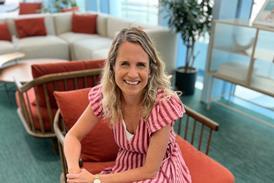
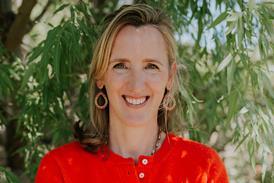





Writer Alex Palmer reflects on BBC presenter Emma Barnett’s powerful documentary on endometriosis and shares her own painful journey with the condition. Amid years of misdiagnosis, debilitating flare-ups and uncertainty, she reveals how she has experienced God’s presence in some of her darkest moments.

Imagine, at the age of twenty-six, having to request a full hysterectomy to have a better quality of life. This is the decision made by Chloe in the documentary Emma Barnett: Fighting Endometriosis, first broadcast on BBC Two on 1 June.
Emma, who also has the disease, debunked the myth that endometriosis is just a bad period, as it’s now recognised as a chronic, whole-body inflammatory disease, when tissue ‘similar’ to the lining in the womb is found elsewhere in the body, such as the bowel, bladder and ovaries. During a period, the endometriosis tissue can’t leave the body. Instead, it builds up, causing inflammation, scarring and pain. Symptoms include heavy menstrual or irregular bleeding, back pain, chronic pelvic pain, fatigue, nausea, ovulation and rectal pain, bloating and fertility problems.
READ MORE: Jesus saw women’s pain, so why do we still ignore it?
There were many issues highlighted in the programme, but the one I struggle with is the length of time it takes to get a diagnosis. According to Endometriosis UK, the average time for diagnosis is now nine years and four months. This feels unacceptable for a gynaecological condition which one in ten women have.
I’ve lived with endometriosis for twenty-one years, but it took ten years to find out what was causing my terrible pain.
I’ve lived with endometriosis for twenty-one years, but it took ten years to find out what was causing my terrible pain. Various departments tried to help whilst my hope and faith wavered when I was made to feel this was all in my mind. One consultant even told me to get pregnant because that would solve it. This flippant remark caused great distress. If God’s grace and love hadn’t been with me on that day, I think I would have been banned from the hospital. By the time I was diagnosed, I wasn’t cross or angry; it was an overwhelming sense of relief to know the pain was very real and not imagined.
READ MORE: Knowing God’s guiding hand throughout my life
Currently, there is no cure for endometriosis, only hormonal treatments like the pill or coil and a laparoscopic operation to remove the endometriosis. So, why did Chloe have to take such a drastic decision to have a hysterectomy? All the women Emma interviewed described the long-term impact of the disease on their bodies and the horrific pain of a flare-up. Chloe explained she can’t eat, sleep, speak or do anything when the pain hits. Where once she envisioned having children, she knows she wouldn’t be able to look after them. Emma described endometriosis as something which steals from you in broad daylight and removes choices. How true this is.
Managing pain is something I am currently battling. I’m in my fifties and, in April 2025, I had what I thought would be my sixth and last endometriosis operation. However, after experiencing severe flare-ups which have made me weep, collapse and have rendered me into constant struggle and exhaustion, it turns out the disease has developed in my appendix and caecum (first part of the large bowel). I have the pain level of appendicitis. This is so rare that only around 1% of women diagnosed with endometriosis will develop it in this area.
READ MORE: The world’s response to pain is characterised by avoidance and blame but on the cross, Jesus chose pain and responsibility
Recently, I have had dark moments, but I haven’t asked God, why me?
Recently, I have had dark moments, but I haven’t asked God, why me? Instead, I’ve prayed, “God, where are you in this?” Especially when some people thought I was lying. God has been by my side and surrounded me with the right people at the right time. The bowel team I’m under have managed my case quickly and worked out the problem. At work, I requested an Occupational Health appointment. The practitioner was a former bowel nurse, and she knew and understood my problem. After our conversation, I felt grateful and reassured because, for most women who are diagnosed with this, it is after an emergency operation to remove their appendix.
The problem with a hidden, chronic illness is that assumptions are made based on masked pain and unseen problems. This has been mentioned repeatedly on social media since Emma’s documentary. This increased awareness of endometriosis is needed, along with major funding.
I’ve found God’s comfort and peace in the Bible story of the woman who bled for twelve years. The bravery of the woman who was deemed unclean by society due to her bleeding. The hope she had outweighed the risk of condemnation by religious leaders as she touched Jesus’ robe. During her constant visits to doctors, I’ve often wondered, what did people say about her? Did they think it was in her head? Did they accuse her of not having enough faith? Yet, she walked away from Jesus knowing she was important because faith is about a personal relationship. So, no matter what my pain levels are like, I know God sees me as his daughter, and I’m loved and accepted by Him.




















No comments yet