
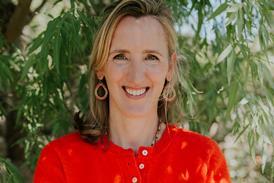








In light of the recent Parliamentary debate on statutory menstrual leave, Ayoola Bandele reflects on the reality of working through severe menstrual pain, drawing on a personal experience at a major event to show how women are often compelled to endure discomfort in silence.

A few weeks ago, I helped deliver a major Christian event at ExCeL London. It was one of those days you don’t really sit still in, and I was on my period. Not the mild, “two paracetamol and carry on” kind. I mean the type where your lower back aches, your stomach cramps, and you’re quietly calculating how far the nearest toilet is.
I didn’t say anything because I didn’t want to make a big deal of it. I kept going, moving from one task to another, managing the partners’ desk, coordinating interviews, and juggling multiple responsibilities. Still, despite carrying a backpack with supplies, I still had to improvise when my supplies ran out, all while coping with pain that others didn’t notice.
Leaving in the early hours, I was drained, exhausted, sore, and to be honest, stunned at how much pain I’d endured invisibly.
Leaving in the early hours, I was drained, exhausted, sore, and to be honest, stunned at how much pain I’d endured invisibly.
READ MORE: Struggling with your period?
When I heard that statutory menstrual leave was debating in Parliament on Monday 13 April, triggered by a public e-petition, I paused to listen. The petition behind the debate called for up to three days of paid leave per month for people living with conditions such as endometriosis and adenomyosis. Beyond policy, this debate highlights why women often feel forced to minimise serious pain, underscoring my own experience of pushing through silently.
READ MORE: Is it safe to have sex when I’m on my period?
Because for some women, periods are inconvenient. For others, they are genuinely debilitating. Yet many of us have learned to minimise it so that we can show up, perform, and only admit the truth when we’re already overwhelmed. Although sometimes the pressure is subtle. The look when you step away, the hesitation before you ask for help, the quiet fear you’ll be seen as unreliable. Still, we are “pushing through”, which isn’t always just a personal choice but an expectation.
And this isn’t only a UK conversation. Lupita Nyong’o has been speaking publicly about fibroids and the lack of attention to women’s health. Even broadcaster Jackie Adedeji has shared her endometriosis journey and surgery on social media. These are different stories, but it’s still the same pattern, showing us that women’s pain is still too easily dismissed as “just part of life.”
READ MORE: Should we discuss period pain and sex in church?
So, what does the debate tells us? For one, our definition of productivity is still narrow.
So, what does the debate tells us? For one, our definition of productivity is still narrow. We reward endurance and output. We admire the woman who “just gets on with it.” But bodies have limits, and ignoring those limits doesn’t make us stronger. Instead, it leaves us depleted. It also exposes how uncomfortable we still are with women’s bodies. Periods are normal, yes. But chronic pain shouldn’t be normalised. And silence shouldn’t be mistaken for strength.
This is where, for me, a Christian lens reshapes the conversation. Christianity doesn’t side-line the body; rather, it dignifies it. Even Jesus Christ recognised our physical suffering. As a matter of fact, he stopped for the woman who had been bleeding for years. Not to shame her, but to restore her in public. That moment challenges our instinct not to keep women’s pain hidden and unsupported.
So what does this look like in everyday life, even without a change in law? In workplaces, it can look like making honesty safe. Not penalising women for naming pain. Treating simple adjustments, flexible start times, working from home on flare-up days, the freedom to step away, as reasonable, not exceptional. In churches, we can talk about women’s health with more honesty and far less discomfort. Also, not only celebrating women in visible roles, but supporting them in the realities people don’t always see.
And for many women, it may begin with telling the truth in the important moments: I’m in pain today. I can still contribute, but I need support.
I keep thinking about that night at the ExCeL Centre. I’m glad I showed up. But I don’t want “she pushed through” to be the only story we know how to tell. Parliament debated menstrual leave, but the deeper question is whether we’ll build cultures, at work, in church, and in everyday life, that recognise women’s pain and support them openly, so women don’t have to suffer in silence to be taken seriously.






















No comments yet