


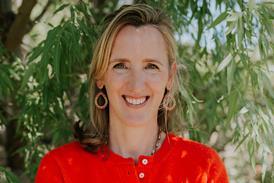






Singer-songwriter Alex Kate reflects on one of the most corrosive forces shaping our era: the way division has seeped into everything from our screens to our relationships. Polarisation is one of our modern-day travesties, she argues, not just because it pits us against each other, but because it steals our capacity for curiosity, empathy, and grace.
In an age defined by unprecedented connectivity, it is strikingly ironic that we seem more divided than ever. The digital revolution once promised a global village, a shared space for ideas, empathy, and understanding. Instead, it has given rise to echo chambers, outrage economies, and a culture that has forgotten how to disagree without despising. Polarisation has become one of the defining tragedies of our time, rooted deeply in the algorithms that shape our screens and the media institutions that shape our minds.
READ MORE: Louise Perry and the surprising turn toward Christian wisdom
At school, we were taught to “sit on the fence,” to weigh both sides of an argument, to appreciate complexity, and to lean only gently one way after careful thought. It was an exercise not just in intellect, but in empathy, grounded in the humility of knowing we never see the full picture. Today, however, fence-sitting is seen almost as a moral failure. Social media rewards certainty, not subtlety. Algorithms thrive not on nuance but on outrage, clicks, and engagement. The more polarised we become, the more predictable our behaviour and the more profitable our attention.
This digital architecture breeds not conversation, but conflict.
This digital architecture breeds not conversation, but conflict. Platforms designed to connect us now pit us against each other. “Divide and conquer” was once a political tactic; now, it’s a technological business model. Every scroll deepens the trench between “us” and “them.” Disagreement has become synonymous with hatred, and questioning one’s own “side” risks exile.
READ MORE: Deconstructing my faith is what saved it, we shouldn’t be afraid to start from scratch
We see the effects everywhere, in politics, the media, and even our personal relationships. The recent controversy over the BBC’s edited clip of Donald Trump’s speech is a telling example. Whether one supports Trump or not is beside the point; what matters is that the very institutions once trusted to uphold balance are now accused, often rightly, of selective framing. When facts themselves become battlegrounds, truth suffers collateral damage.
Similarly, the uproar around the Charlie Kirk controversy illustrates how easily public discourse fractures into tribal warfare. Instead of wrestling with ideas, we attack identities. The individual becomes a symbol; the issue, a proxy war. Social media ensures that everyone is watching, judging, and choosing sides. In such a climate, empathy feels radical, and silence feels suspicious.
As a singer, I’ve become increasingly disheartened by the state we’ve reached
As a singer, I’ve become increasingly disheartened by the state we’ve reached. I’ve never been especially vocal about my faith online, deliberately so, since it’s easy to be pigeonholed into a political camp. I’d rather be known by my actions, guided by the simple commandment: “Love the Lord your God with all your heart, with all your soul, with all your mind and love your neighbour as yourself.” I fail often, but I try. Yet the growing tide of hatred has become impossible to ignore, and I’ve felt compelled to speak up.
READ MORE: As Christians we can talk like beauty is a bad thing, but here’s why I think that’s wrong
Recently, I released a song called “Maybe God is Everywhere?” - a plea for people to lay down their dividing lines and focus on the author of love. In it, I ask, “How did holy turn into hatred?” and “Where are you in our Bibles, now they are all machine guns?” It’s a call for love to prevail and a challenge, especially to Christians, to consider that perhaps God is present even in the places we deem dark or godless. The video for it importantly shows all types of scenarios around the world where people might not think “God is.”
In times like these, I draw strength from my theology degree, and from Saint Augustine’s City of God. Across its thousand pages, Augustine reminds us that empires rise and fall, but God remains above, beyond, and unchanging. I hold fast to that truth in what feels like an especially dark age.
The tragedy of polarisation lies not only in the hostility it breeds, but in the curiosity it kills. We have forgotten the strength of doubt, the virtue of humility, and the courage it takes to say, “I don’t know.” It’s time we relearn the art of disagreement, to return to that classroom discipline of examining both sides, embracing complexity, and finding comfort again in nuance and the grey. Ultimately, not judging but loving.




















No comments yet