









Journalist Tabby Kibugi explores why critics and champions are clashing over the Bible Society’s findings, and suggests the intensity of the argument points to a deeper question about spiritual hunger and cultural change.
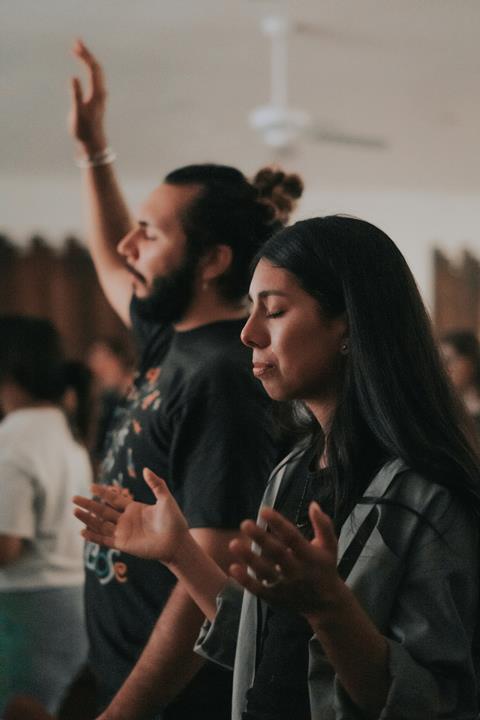
Last April, the Bible Society published The Quiet Revival report which suggested that young adults were attending church now more than ever. According to the findings, church attendance in England and Wales had risen from eight percent in 2018 to 12 percent in 2024 among Gen Z.
When that report came out, I remember the mixture of reactions among Christians and non-Christians alike ranging from shock to hope and delight. For once, the story wasn’t about churches in England being repurposed into bars and pubs.
But in the months that have followed, the report has become the centre of an increasingly heated debate. The general population and experts are questioning its findings and the entire premise of the quiet revival. Academics and commentators have questioned its methodology, pointing out that the conclusions about church growth were largely based on a single survey. Coverage from outlets such as the BBC has highlighted those concerns, and the polling company, YouGov, has confirmed it will repeat the research following mounting scrutiny.
READ MORE: ‘I am not putting too much weight on the so-called “quiet revival”’
On one hand, this is exactly how research should be conducted. To be clear, as a Christian, I understand why the data needs to be verified. If a survey is an outlier, it should be tested. Churches shouldn’t build vision on numbers that don’t stand up to what is really happening on the ground.
What has surprised me, however, is not the scrutiny itself but the tone of the reaction surrounding it.
What has surprised me, however, is not the scrutiny itself but the tone of the reaction surrounding it. Online, the discussion has ranged from scepticism to outright mockery. I’ve seen some people celebrate that they have been proven right. Others have framed the report as Christian propaganda or evidence of hidden political agendas. In many other corners of the internet, the idea that church attendance might be increasing among younger people seems almost absurd. This debate has elicited even more reactions than the initial revival report.
READ MORE: ‘Revival is in my bloodline’
Watching this unfold, I have begun to wonder whether the debate is really about the possibility of there being an error in the statistics after all. The speed with which the possibility of revival has been dismissed suggests that something deeper is at work. Are we so used to headlines about empty pews and an increasingly atheist society that the idea that younger generations might be rediscovering faith doesn’t fit the narrative that we’ve held on for so long?
I’m in my twenties and I returned to church a few years ago after a long hiatus during the COVID period.
I’m in my twenties and I returned to church a few years ago after a long hiatus during the COVID period. This response has felt discouraging. I know many other young people like me who are also re-exploring their faith and stepping into churches for the first time in ages. We rarely see their individual stories in the headlines. But they are very much real. To see our return back to faith reduced to political suspicion or dismissed outright has been disheartening.
READ MORE: A French catholic nun is leading many to Jesus online
It is entirely possible that the final numbers will be revised down or interpreted differently once further research is carried out. But even if the statistics change, the fact remains that this debate has proven how quick our culture is to question the possibility of a younger and more open-minded generation going back to church.
Much as some may not want to admit it, there is a growing number of people, whether young or old, soul-searching about their faith. There has also been a surge in the number of adults getting baptised in the UK. Statistics revealed that the number hit a ten-year record-high in 2024. As Christians, our task isn’t to settle the argument over one survey or another, but to consider how the Church can better nurture those who are beginning to seek faith.
The debate over the Quiet Revival report may eventually be settled by further research. But it has exposed how our society still views Christianity and its adoption and that will take much longer to resolve.
























No comments yet