
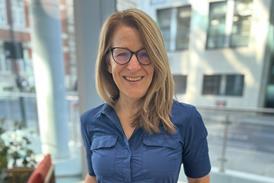






As the new school year begins, psychotherapist Monique Thomas speaks to educator and psychologist Emma Noel Pinnock about understanding neurodivergent children, and why creating places of belonging may be one of the most Christ-like things we can do.

Every September feels like a fresh beginning. Our church calendars align with the influx of new students into our cities, and children walk through the school gates carrying new hopes for the year ahead. For many parents, it’s an exciting season. But for some, it’s also filled with apprehension, because alongside the ordinary demands of family life, they’re navigating the hidden emotional labour of supporting a neurodivergent child through systems that are overstretched and difficult to navigate.
They’re learning an entirely new language: assessments, waiting lists, EHCPs, referrals, executive functioning, sensory processing, reasonable adjustments. And the right support isn’t handed out freely; for some, it’s hard-won through court cases, which adds a weight of its own.
Beneath the practical challenges sits a much deeper concern about belonging: will this child be seen for who they are, and given the same opportunities to flourish as every other student in their class? In my world as a therapist, I often sit with the courage, the tenacity, and also the distress of parents navigating life on the margins of our education system. That’s why I wanted to speak with my long-time friend Emma Noel Pinnock.
The book’s central question is simple: what if education learnt to understand the child, rather than asking the child to fit the system?
Emma is an educational leader, speaker and founder of Essential Education Group. Her new book, Igniting Potential: The Inclusive Teacher’s Guide to SEND Success, published by Routledge on 22 July, draws together more than twenty years of experience in education alongside psychology, neuroscience, and her own lived experience as the mother of a son with Down syndrome. The book’s central question is simple: what if education learnt to understand the child, rather than asking the child to fit the system?
One of the first things Emma says, when I ask what first convinced her that we needed to rethink how we understand children, is this: “Difference is actually the norm.”
We spend so much of our lives talking about children who are “different”, yet Emma gently challenges the assumption sitting underneath that language.
“What we’ve done in our systems is create a normality, a normality of how we learn, of how we behave. Education has shaped that journey too. We’ve created schemes of work that fit the ‘normal’ brain, and I don’t love that word. But actually, difference is the norm. Every time a child presents slightly differently, or distinctively differently, they fall out of the norm that’s been created. That’s why education needs to think again.”
It immediately reframes the conversation. Rather than beginning with deficit, Emma begins with diversity.
“We need to capture the real reality of the brain, that it’s diverse, wonderfully diverse. All of our brains change through our lifetimes, through experience. We have bright spots and blind spots, and all these lovely variations in how we learn. Why is education becoming so narrow, so rigid? Don’t get me wrong, I understand to an extent. We’re educating a nation’s children, so we can’t have bespoke everywhere. But is our norm too narrow?”
I find myself wondering how often we’ve confused “different” with “less than”. Neuroscience paints a very different picture. No two brains develop identically. Genetics, relationships, experience and environment all shape the architecture of the brain. Variation isn’t the exception; it’s part of being human. Even among neurotypical children, there is enormous variation in attention, memory, language, emotional regulation and problem-solving. Neurodiversity simply invites us to recognise that some of these natural variations are more significant than others, and that difference does not automatically mean deficiency.
One of the most fascinating parts of our conversation centres on something many parents have never been taught: the importance of regulation before cognition. Emma explains that before a child can learn, a child needs to feel safe.
A dysregulated body, a dysregulated mind, cannot learn. All the brain wants to do is protect us, get us to some semblance of a regulated state.
“A dysregulated body, a dysregulated mind, cannot learn. All the brain wants to do is protect us, get us to some semblance of a regulated state. That takes energy away from cognitive challenge, away from learning new concepts. So our first job, for every child, is to make sure they are safe, they feel regulated, and they’re able to take safe risks within our environments. That’s how education actually works. If we were going to learn something now, but felt really unsafe in the environment, our body would be scanning for the exit. When our children are dysregulated, their bodies are looking for the exit, from the work in front of them, from the social demand, from the sensory demand. And in all that scanning, the brain isn’t listening to the book being read or the maths being shared. If we don’t get that right, we leave our children behind. That’s really key.”
Suddenly, the child who cannot sit still, who refuses to engage, who seems overwhelmed, looks rather different. Perhaps they aren’t choosing not to learn; perhaps their brain is doing exactly what it has evolved to do.
Neuroscience has transformed our understanding of learning over the past two decades. We now know that when the brain perceives threat, physical, emotional or sensory, it diverts energy away from higher thinking towards survival. The parts of the brain responsible for planning, reasoning and learning simply cannot function as effectively when the nervous system is overwhelmed. Behaviour, then, isn’t always something to manage. It’s something to understand.
The body before the brain
Emma calls her whole-child approach responsivism, a reminder that children learn with their whole selves, not just their minds. “Responsivism is really about: are we responsive enough to what’s happening for our children? Yes, we’ve got a narrow curriculum, but within it, are we agile enough to respond? The best schools I work with are agile enough to notice the small group that are different or distinct from the norm, and respond to them. But you also need the knowledge to know what to respond to. That’s what the model is aiming to give people.”
That knowledge starts with the body. “One of the first pillars of any child’s development is how the body develops, reflexes, for instance. Some people have underdeveloped or immature reflexes, which can stop them sitting still, focusing, or writing. Even though education knows about this intellectually, our curriculums aren’t built to support it, and I think that’s one of the biggest gaps we have. When we talk about a sixteen-year-old with dyspraxia, where the body isn’t quite following what the brain is doing, where they don’t always know where they are in space, there are lots of reasons for that. Often it traces back to immature reflexes, or things like proprioception. We’re just not looking at those things early enough.”
She offers a striking example of how sequencing matters: “Typically, not for every child, but typically, a child says their first sentence after they’ve taken their first step. They’ll say plenty of words before that, but the fluency comes after the body has done the work it needs to do, because the energy goes to the body first, not the cognitive piece. The cognitive piece is always quietly storing everything, which is why I believe every child can learn. But when the body is still doing its work, that’s where the energy goes.”
The implication, she says, is significant: when we miss an underdeveloped body, immature reflexes, an overwhelming sensory or emotional world, we’re skipping the foundations a child needs before real cognitive challenge and independence become possible.
Emma and I entered motherhood on the same day, both giving birth to boys, and I have learned so much from her approach to parenting.
Emma and I entered motherhood on the same day, both giving birth to boys, and I have learned so much from her approach to parenting. I wanted to know how becoming a mother had shaped, or sharpened, her professional understanding.
“I’ve worked in this field for over twenty years now, I’m going to stop saying that number, it’s starting to show. I was always drawn to SEND in my classroom because of my psychology background. I trained wanting to become an educational psychologist, but the classroom became my love, so I never took that leap, though it’s coming. That was always going to be the space where I said, actually, I need to look into this properly. Why is this child in my class not learning like the rest, when they can clearly learn, they can share, they can articulate, they can do things? Why not this? That’s where the journey started for me: asking that curious question. In the book, I talk a lot about curiosity, because we have to be curious about why things aren’t happening.
“Then, eleven years ago, I was blessed, truly blessed, with my own bundle of unique joy, my son, born with Down syndrome. Suddenly I had this whole professional journey behind me, working with so many children with so many different needs, and now I was a mum whose own boy was going to need all of that knowledge. It sharpened something, especially around development. As a teacher, children mostly arrived once the ‘development piece’ was technically done, in inverted commas, except it was never really done. With my own boy, we were thinking about things like his muscle tone, and how that affects cognition. Muscle tone isn’t really about how the body develops, it’s about how quickly messages travel from body to brain. With reduced muscle tone, you process more slowly. So I had to deal with that early, the muscular work, the myofunctional therapy, all of it, so he could process quickly, because that was going to be his drawback.
“And it clicked for me: why has that never happened for every other child? Is this really what happens for most families? Because it isn’t, that knowledge simply isn’t in the system. I dug deep into the foundational pieces, which is where the model really comes from. He had to be motivated to work. We had to understand what his inner ear was doing for his balance, just so he could sit. All of it compounded by everything I’d already learned before him, and it deepened the passion that was already there.
“One of the things I’m most grateful for is that I never told a parent anything I wouldn’t have been happy to hear myself. It made me reflect on my whole career, and where I’d have needed to say ‘that’s something to learn from,’ I did. But mostly it confirmed I’d been on the right track all along. Sharing this journey now, retrospectively, has been really powerful.”
One word keeps surfacing throughout our conversation. Curiosity. Emma believes one of the greatest shifts we can make is moving from correction to curiosity. “Rather than asking what’s wrong with this child, we need to become curious about why things aren’t happening.”
What a beautiful question. Not “what’s wrong?” but “what haven’t we understood yet?” I wonder how many relationships, far beyond parenting, might change if we learnt to ask that more often. In therapy, I’ve often discovered that behaviours which initially appear confusing begin to make perfect sense once someone’s story is understood. It’s a question that changes everything it touches, the classroom, the therapy room, the family dinner table. Underneath every “why won’t they just…” is usually a child whose truest self hasn’t been seen yet.
Reflecting on my conversation with Emma, I can’t help thinking about the way Jesus interacted with people. Again and again throughout the Gospels, he created safety before he invited change. He saw people, listened, restored dignity, and only then did transformation begin.
Next month, in Part 2, Emma and I talk about what it means for a child’s worth to rest on being rather than achieving, and what she believes Jesus would notice first if he walked into one of our classrooms today.
A few reflections for this month
-
Begin with curiosity before correction.
-
Remember that behaviour is often communication.
-
Ask what your child’s nervous system might be telling you.
Further Reading Igniting Potential: The Inclusive Teacher’s Guide to SEND Success by Emma Noel Pinnock was published by Routledge on 22 July and is available through Routledge and all major booksellers.
This is a 2 part series - part 2 will be in the October issue
















No comments yet