
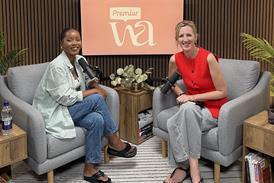
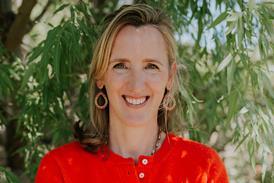






In this month’s health column, therapist Monique Thomas explores what happens when we stop measuring children by achievement and start seeing their God-given worth. Speaking to educator and psychologist Emma Noel Pinnock, she considers neurodivergence, belonging and how parents, teachers and churches can learn to hear children’s voices.
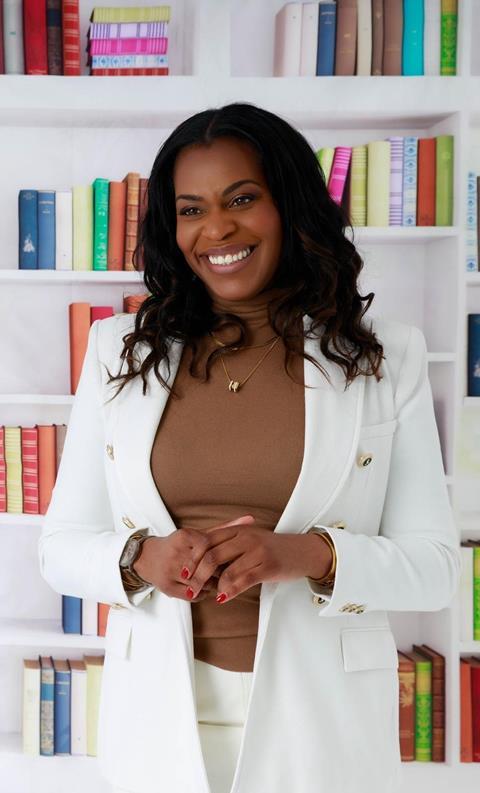
Last month I sat down with my long-time friend Emma Noel Pinnock, educator, psychologist, and founder of Essential Education Group, to talk about her new book, Igniting Potential: The Inclusive Teacher’s Guide to SEND Success (Routledge). Emma is also the mother of a son with Down syndrome, and our conversation moved between the professional and the deeply personal, between the classroom and the church.
In part one, we talked about what it means to understand a neurodivergent child rather than ask them to fit the system, regulation before cognition, the body before the brain, curiosity before correction. This month, our conversation turns to something even more fundamental: worth. Our conversation becomes especially personal when Emma speaks about becoming a mother. “I wanted to experience everything he was bringing to this world, not what I wanted him to bring.”
Isn’t that one of the deepest invitations of parenting, to let go of the child we imagined, and delight in the child God has entrusted to us?
“It’s a real challenge in the world we live in, we’re surrounded by perfect images, perfect family images, always trying to perfect. That emotion isn’t wrong; it’s honest. But when our children present differently in the world, they present differently, not less. We have to find the beauty in that difference in order to enhance it. My son would have been classed as pre-verbal, I don’t love the word non-verbal, but he was so expressive. Could I tell what he wanted? Oh, yes. I could see he was connected to his world. I could have looked at the pre-verbal part and called it a deficit, or I could look beyond it and say: he is expressive, and I can hear my son. I just needed to find the key so other people could hear him too.
“I wanted to experience everything he was bringing to this world, not what I wanted him to bring, and I’ve had the best experience because I allowed that. Have I had moments where I’ve questioned, where I’ve prayed? Most definitely. But I look at him and see such a beautiful representation of who God made us to be, uniquely, wonderfully ourselves. I don’t think every parent needs to reach that place quickly, because it is hard. But if we can just glimpse behind the curtain we were promised, and sit in it for a minute, watching our children in their own clear way of being, it’s such a beautiful thing.”
I ask Emma what flourishing really looks like. “It’s not merit. It’s being.”
Our culture teaches children, remarkably early, that their value is measured by performance.
We live in a society that focuses so much on merit.
“We live in a society that focuses so much on merit. We move through systems, we create success within them, and people see the success. But so many people who create that external success may not be internally flourishing. Are we sitting with who we are, the beauty of who we are, flaws and all? I think sometimes we have to allow our children to flourish by sitting with who they are, not in comparison to others, not measured against where they ‘should’ be. Just, who are you, right now, in this moment? Can you capture who you are as a person? Many adults find that difficult. But that’s my philosophy for children, because once you can understand yourself and hold yourself, there’s real power in that. That’s the key to thriving.
“Then you can walk into any environment and just be, understand who you are. As a Black woman in this world, I’ve had to learn that too. We walk into rooms and people put their own perceptions on us, expect us to be certain things. I learned to walk in knowing exactly who I am and why I’m there, and that took away so much of the extra energy the world adds. I think it’s the same for anyone who’s unique, who stands out. Can you walk into the space and know exactly why you’re there? Because you’re valuable, that’s how we flourish. We have to truly understand what we bring to any situation. It’s not merit. It’s being.”
Grades. Targets. Achievements. Attendance. Progress. Even adulthood rarely frees us from that pressure, and in my therapy room, I see just how far it follows people.
So many of the adults I sit with were never assessed as children. They were labelled disruptive, lazy, dramatic, difficult, or simply “too much”, and they built an entire adult life around hiding whatever it was that made them different. Diagnosis, when it eventually comes, is often less a discovery than a grief, years of masking, of silent suffering, of wondering what was wrong with them, suddenly given a name that arrives decades too late to undo the shame already absorbed.
Particularly in Black and brown communities, that shame carries an extra layer. Neurodivergence can still be met with silence, misunderstood as a spiritual failing, a lack of discipline, or something to simply pray harder against, rather than a different way of being made. I’ve sat with clients who have never told their own families they are autistic or have ADHD, terrified of being seen as less devout, less capable, less whole. The invisibility isn’t accidental; it’s often protective, learned early, in rooms where difference wasn’t safe to show. Faith, at its best, should be the place that unmasks that shame rather than deepens it. A God who makes no mistakes, as Emma reminds us, did not make a mistake in them either.
Toward the end of our conversation, I ask Emma what she’d say to parents raising a neurodivergent child. Three things surface.
Toward the end of our conversation, I ask Emma what she’d say to parents raising a neurodivergent child. Three things surface. “The first is to allow our children to teach us. As parents, we default into the role of teacher, and rightly, that’s part of it. But do we let them truly teach us? Can we sit in the discomfort when they show us something different from how we believed the world worked? That doesn’t mean anything unsafe, but do we make space to be taught? That looks different for everyone, and I think it’s really key.
“The second is letting go of the dream. We all do it, we find out we’re pregnant, and we picture how the child’s life is going to go. But when we look at the child actually in front of us, can we let go of the dream we created? Can we allow them to flourish within, or outside, the lines of their own life? I find that challenging myself. My boy pushes past me sometimes, and part of me wants to pull him back. But the beauty is in letting him go a little way and seeing what it means to him.
“And the third is experiences, as many as you can possibly give them. Let them tell you ‘that made me feel great’ or ‘that didn’t feel okay, that’s where my limit is.’ It doesn’t need to cost money. Just opportunities.”
I ask Emma what happens to a child’s sense of self when their differences are consistently misread. “We reduce potential, that’s why the book is called Igniting Potential. We reduce it the moment we label everything as overly negative. And to be clear, we’re human, when a ‘sparky’ child is throwing things across your classroom, or you’re the parent on the other end of it, it’s okay to say ‘I’m struggling with this.’ That’s boundaries, and we need boundaries. This isn’t about being boundaryless. But within that space, that child’s voice has been suppressed somewhere, sometimes for biological reasons, sometimes environmental. The only reason a human truly reacts that way is because their voice isn’t being heard, and they have to share it differently.
“Babies cry, as we know, and sometimes that cry doesn’t mature the way we expect, or it matures in a way that looks different to us. When we suppress the cry, we suppress the person. It’s about how we safely and confidently help children learn to cry well, so that as adults, they know how to speak well, because the cry is the starting point. We know what adverse childhood experiences do. And with neurodivergent children especially, when they sit at the edge of the ‘norm’, the instinct is often ‘why are you acting that way?’ I’ve been guilty of that myself.”
Given her own faith, and the recent work she’s been doing training churches on inclusion, I ask what practical steps a church community can take. “One of the best jobs I’ve had this year has been training within a church. I love it when churches invite me in, because it brings every part of me together, my work, my family, my faith. Church is meant to be one of the places where belonging sits at the very heart of everything, and that’s hard. It really is. But we need to love without the perfection lens, and love through the Jesus lens, because God makes no mistakes. None of our children are mistakes. Not one. So there is already resource, and space, and love available for every family and every child.
“Practically, the first question is: do we actually want our families to belong? Does that show in how we build our sessions, how we shape our spaces, how we respond when a child runs up to the pulpit mid-service? Do we make space? That’s the starting point. And if we’ve made space, the love follows, the relationship follows, the belonging follows. Families raising children with additional needs are often at their most isolated, and it’s places like churches and community centres that can offer real belonging. God makes no mistakes. The resource is already there. We just have to tap into it.”
If Jesus walked into one of our classrooms today, what do you think he’d notice that we often miss?
I ask Emma one final question: if Jesus walked into one of our classrooms today, what do you think he’d notice that we often miss? “I think he’d notice the child whose voice isn’t being heard. He’d hear that voice before he heard anything else. Our voice is the strongest tool we’ve ever been given as humans, and children are still finding theirs, it goes from cry to voice. I think he’d give voice to the voiceless. He’d see the child whose voice isn’t fully their own yet. That’s what I think it would be.”
Again and again, Jesus noticed the people everyone else overlooked. The child. The outsider. The misunderstood. The one whose dignity had quietly been lost beneath labels and assumptions. Perhaps following him means learning to notice them too, not simply making room for children who experience the world differently, but becoming communities that delight in them. Because every child has a voice. Sometimes they simply need adults willing to slow down long enough to hear it.
I close by asking Emma what she most hopes this book will do, for the children who read it, or whose parents and teachers do. “Every child can learn. Every child has potential, I know that’s a wide statement, but the more we hold onto that reality, the more space we make for it. Sometimes, when we see a need, or a child who’s different, we automatically put a ceiling on them. A quick personal example: I have moments where people ask me a question they could easily ask my son directly, and I just say, ‘he can answer that, go ahead.’ It’s because they’ve already unconsciously ceilinged him. They’ve already decided he can’t, and even if he doesn’t answer, the discomfort in that moment belongs to them, not him, which I understand completely.
“But my hope for this book is that we stop placing concrete boulders on our children just because there’s a word attached, SEND, a need, a disability. Let’s take that block away and let them flourish, let them be whoever they’re going to be. That’s what I want most from this book, that we take off those concrete boulders of labels.”
I think of the parents I sit with each week, carrying the exhaustion of appointments and assessments and unanswered emails, still showing up at the school gates with hope intact. I think of the children who have already learned, far too young, that their voice is inconvenient. And I think of a God who declared belovedness before there was anything to prove, who notices the overlooked child first, not last.
Belonging isn’t a project we run alongside the real work of church, school, or therapy. It is the work. Difference isn’t the interruption to normal life. It is normal life, wonderfully, deliberately so. Perhaps the most Christ-like thing any of us can do this season is simply to slow down long enough to hear the voice that’s been waiting to be heard.
A few reflections for this month
Celebrate progress without making performance the measure of worth.
Notice whose voice might be going unheard in your home, classroom, or church.
Pray not only that your child will succeed, but that they will know they are deeply seen and deeply loved.
Further Reading: Igniting Potential: The Inclusive Teacher’s Guide to SEND Success by Emma Noel Pinnock was published by Routledge on 22 July and is available through Routledge and all major booksellers.





















No comments yet