

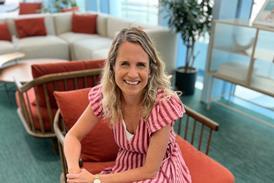
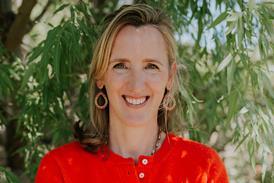





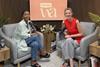
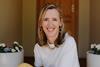
Jane Knoop spoke to Rita Baroni about the devastating diagnosis that left her daughter facing a lifetime in a wheelchair, and the remarkable events that followed. Rita shares how, in her darkest moment, she stopped pleading for a miracle and simply asked God for the grace to keep going.
“Lord, your word says that your grace is sufficient,” Rita prayed. “And right now, I need an abundance of your grace.”
She was curled up on the bathroom floor, the only place a mother of three children under four could find to be alone. Rita was at the end of herself, physically spent and emotionally frayed. “I can cope if Celeste never walks on this earth,” she continued, her voice breaking. “As long as I know she can run in heaven.”
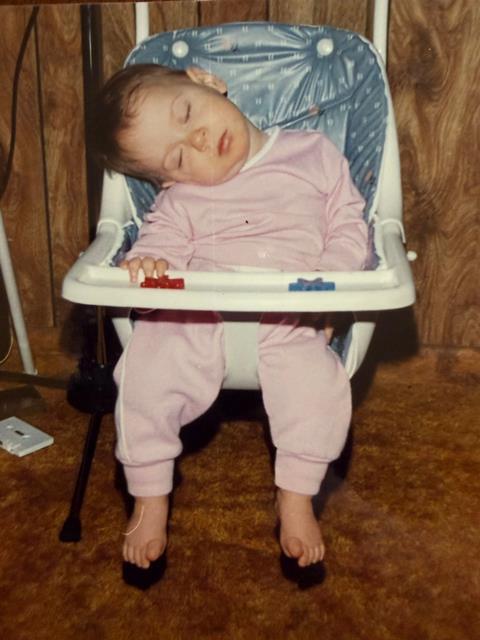
But her moment alone didn’t last. At the doorway, a small figure appeared, pulling herself forward by her arms, inch by inch across the threshold. Celeste. Rita’s beautiful, unexpected third child, diagnosed with cerebral palsy before her first birthday, a condition that meant no toddling, walking or running with her siblings. No cure. No confident crawl, even at 16 months.
Rita gathered her in her arms, and Celeste traced the tears on her mother’s face while the Holy Spirit fell gently but unmistakably over them. They lingered in that moment, and Rita was in no doubt of God’s presence with them. She had prayed for God’s grace and knew he had heard her. What she didn’t know in that moment was that God was beginning the process of healing Celeste.
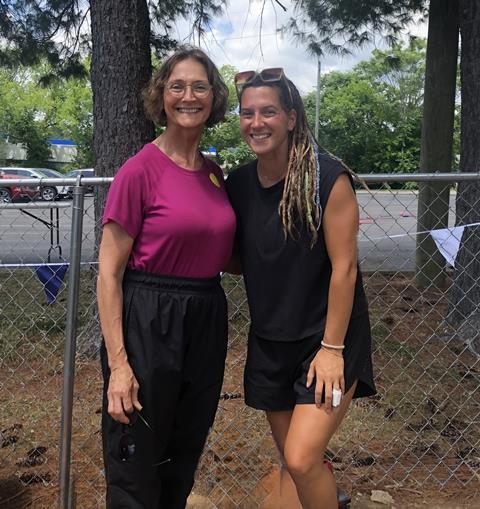
Raised to believe in miracles
Rita grew up in a home where miracles were expected. Her family moved often, and with each new town came a different church tradition: Pentecostal, Nazarene, Baptist and Presbyterian. But beneath the variety was a steady conviction that God was present, active and able to heal people today as he did when he walked the earth.
“My brother was healed when he was eight,” Rita recalls. Born with one leg shorter than the other, he longed to play baseball with the other boys in their small Alabama town. “One day he went to the altar and asked the elders to pray for him. His leg grew right there. Nobody could take that testimony away from that little eight-year-old boy.”
In no doubt of God’s truth, Rita welcomed Jesus into her heart at just three years old. “I just knew that I was loved by him,” she says. “He was so gracious to root that truth in me when I was little, because he knew the hardships life was going to bring. When things became too hard or I didn’t understand them, he was just with me in them.”
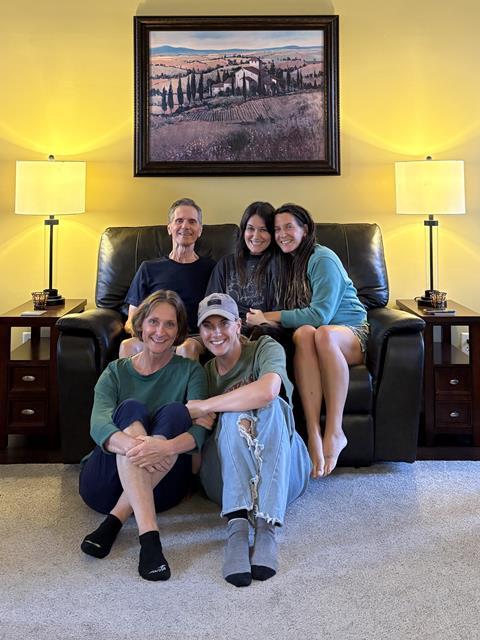
An unexpected arrival
Rita was working in a Kentucky Fried Chicken restaurant in 1980 when the man who would later become her husband walked in. David: a studio musician with an easy charm, a past shaped by recreational drugs and no knowledge of Jesus. She introduced him to church, initially hoping he might accompany the youth choir she directed on piano, but what began as a simple invitation soon became something far deeper. David encountered Jesus, and the life he had been living slowly gave way to an entirely new one.
They married young. Rita was 19 and David was 22. They stepped straight into ministry together, travelling around in their van, leading worship and sharing the gospel. Their first daughter was born in 1984, and three years later Rita became pregnant again. It was a straightforward pregnancy until Rita went into labour six weeks early.
“Despite it being so early, they assumed everything was OK because my bump was measuring big,” Rita recalls. The doctors were confident the baby was healthy. And she was. Charity came into the world, smaller than expected and a little jaundiced, but thriving. “So why did my back still feel like it was breaking?” Rita remembers thinking. Assuming the pain was related to delivering the placenta, the doctor urged her to push again. “But when I pushed, another baby came out!”
Despite having two scans, the second baby, tucked behind the first, was never detected. Celeste had arrived completely unexpectedly. She, too, appeared healthy, a little stiff in her movements, but otherwise well.
In those first moments, wrapped in shock and joy, no one yet realised that something unseen had already begun during birth. Hidden complications that would only become clear in the months ahead.
Early signs
“It was around six months that the first questions were asked,” Rita explains, recalling a visit to the paediatrician with her twins. One was strong and able to sit, the other still with very little head control. “Never compare twins’ progress,” the doctor had urged. “Wait and see how she develops.”
But somewhere between six months and a year, the differences became harder to ignore. Charity was beginning to pull herself up, exploring movement and balance, while Celeste remained largely immobile. Her body seemed stiff and unresponsive, with little sign of improvement over time.
By her one-year check-up, Rita’s quiet concern had become something more urgent. “I knew something was off,” she remembers. Celeste could not sit unsupported, her neck lacked control, and even simple movements required careful support. Feeding was difficult, and her body would collapse forward if she wasn’t held upright. What had once been explained as developmental variation between twins no longer felt like reassurance. Growing uncertainty led to a referral to a paediatric neurologist, a scan and eventually a diagnosis.
The diagnosis with no cure
“Celeste will never walk. She’ll never run.” These were the words of the neurologist as Rita and David listened in shock to Celeste’s diagnosis of cerebral palsy. “It is an issue with the brain,” the neurologist continued. “There is no cure.”
She went on to explain that it was likely caused during birth when there was a lack of oxygen to her brain. “I broke down and cried when I got to the car,” Rita shares. But with three young daughters to care for, she instinctively forced herself to shift into survival mode. There was little space to dwell on her grief. “I’m a doer and I had to keep going.”
Rita launched herself into a relentless cycle of appointments with physical therapists and occupational therapists. “David was travelling frequently and I was exhausted,” Rita explains. “I believed God could heal her. But honestly, I was exhausted. I was so busy loving the child God had given me and trying to care for her well.”
Still, beneath the practical routines and determined resilience, the weight of the diagnosis began to accumulate. One day, overwhelmed and at a loss, Rita called a friend, lamenting the fact that beautiful, bright Celeste would likely be in a wheelchair her whole life. But instead of the words of comfort and solace she needed, her friend replied: “What good is it if she’s smart, if she’s going to be in a wheelchair the rest of her life?”
The conversation ended, and with righteous anger flaring, Rita shut herself in the bathroom to cry out to God for his grace.
God’s grace and healing
On leaving the bathroom, with little Celeste enveloped in her arms, Rita carried a peace that surpassed understanding. She continued with her day, grateful for God’s grace and presence.
But that same evening, Rita was caught off guard. Celeste pulled herself upright against the family’s piano bench, the same child who, only hours earlier, had little to no spinal control. “I thought maybe the physical therapy was finally working,” she says. But the next day, Celeste climbed the stairs. The day after that, she pushed herself onto her hands and knees and crawled properly for the very first time.
“I looked at David and said, ‘I think the Lord is healing her.’”
At Celeste’s next physical therapy appointment, the therapist emerged from the treatment room visibly confused. “You brought me the wrong twin,” she told Rita. “There’s not one tight muscle in her body.”
Within a week, the changes were impossible to explain medically. Celeste’s body, once rigid and unresponsive, had relaxed completely. The child who could not sit upright was suddenly climbing, crawling and moving normally. Returning to the neurologist who had previously warned Rita and David that their daughter would likely spend her life in a wheelchair, she took further scans and looked at the results, bewildered.
“We can’t find anything wrong with Celeste’s brain,” she told them. “We can’t find anything wrong with her motor skills.”
“When I hung up the phone, I exhaled,” Rita reflects. “I don’t think I realised until then that I’d been holding my breath for over a year.”
Living in the ‘meanwhile’
Today, Celeste is healthy, married and has four children. The little girl once told she would never walk went on to excel in gymnastics as a child, even winning gold medals in state competitions.
“Jesus healed her completely,” Rita says. “Not partly. Completely.”
Yet while she rejoices in Celeste’s healing, even now, 36 years on, she knows that healing and suffering often sit side by side. In recent years, her husband David has been diagnosed with Parkinson’s disease, another neurological condition. Rita has prayed daily in hope for seven years but is still waiting for healing to come to David’s body.
“There have been many moments of tears and sorrow and weeping,” she shares. “But I know that whatever is going to come, his grace is already holding it.”
Every day, Rita sees the old piano bench where Celeste first pulled herself upright. It has become a symbolic reminder not simply that God heals, but that his grace sustains in every season, including the unresolved ones.
“We all have a ‘meanwhile,’” she says. “A place where we are waiting for something: healing, breakthrough or answers. But we’re not waiting alone.”
Supporting documents
Click link to download and view these filesRita
Other, Size 2.97 mbRita 2
Other, Size 3.17 mbCeleste with her family
Other, Size 2.72 mb




















1 Reader's comment