
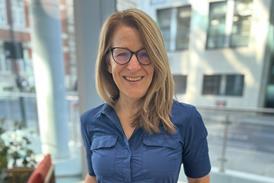




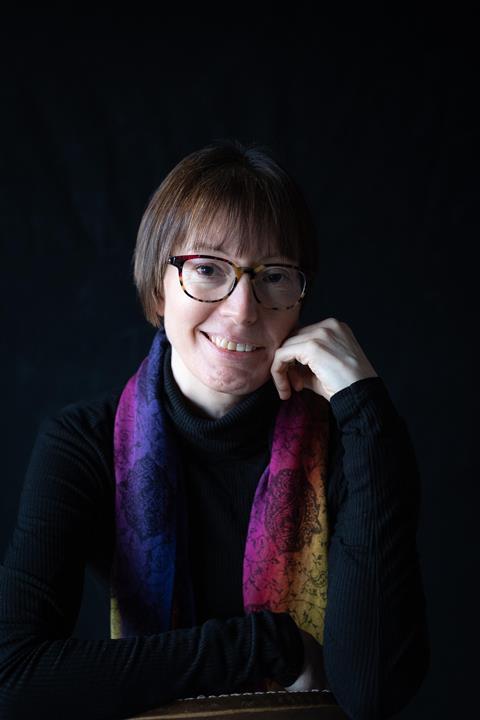
Emily Owen is an author and speaker who lost her hearing overnight at the age of 21 and has undergone numerous surgeries. From brain surgery and intensive care to learning to live with a life-changing neurological condition, she has discovered what it means to be broken – and to meet God there. She tells Claire Musters how faith fuels her writing and why, despite once saying she never would, she finally wrote her memoir.
Have you always been an author, or did you start off with a different career?
Being an author never occurred to me. I loved books, but I didn’t write them. I planned to go to university to read English Literature, studying it as far as I could, and then go into education. But in my first year of sixth form, I was diagnosed with a neurological condition, underwent three brain surgeries in four days and then spent ten days in ICU. I recovered to an extent, but was never able to complete my degree, as hospitals, surgeries and symptoms constantly intervened. During one of my hospital stays, I was feeling far from God. I never lost my faith, but I wanted to be closer to God. I told him I needed a book to help. I was specific about the kind of book I wanted, though I’d never seen one, and God said: “You’d better write it, then.”
How did you land your first book deal?
I did write that book for God, and I thought publishers would snap it up. Ha! I sent it off and received “thanks, but no thanks”. So, in the end, I decided to have the book printed myself. It sold well, albeit within the limited sphere I could reach, and – long story short – on the back of that, a publisher took it on.
What genre do you like writing in most?
Devotional writing is my writing ‘comfort zone’. I love exploring the Bible, discovering new things and getting excited by what God shows me. Most of my books are devotional. I have written my memoir, which is the book I said I’d never write. When I was diagnosed with a health condition which has, among other things, made me deaf, lots of people suggested I write my story.
I was diagnosed, aged 16, with NF2-related Schwannomatosis (formerly Neurofibromatosis Type 2). Don’t worry if you’ve never heard of it! I hadn’t. It took me ages to learn how to spell it, and I’m still learning the new name. NF2 is a neurological condition that causes benign tumours to grow on nerves in my body. I’m deaf because tumours were removed from my auditory nerves. I have facial disfigurement because one of the brain surgeries caused damage to my facial nerve. I walk with a crutch because spinal surgery left me paralysed for weeks, and I am not able to walk far unaided.
Before my diagnosis, I was athletic, musical and academic, so my life underwent a big change. I still have tumours that need dealing with. I’m currently having treatment – similar to chemotherapy – for a tumour in my brain. I said no to writing my memoir for years, until finally God told me that it was time. So I wrote Still Emily.
I’ve also written a fiction book for 8–10-year-olds, called Izzy’s Unexpected Week. I wrote it because I wanted to help children realise that Jesus is with them all the time, not only on Sundays. He is interested in every part of their lives.
What is your writing approach? Do you carve out time each day, or do you simply write when the mood takes you?
Much of my writing happens before I type a word. I do a lot of preparatory thinking. Some people write it all out, then edit it. I edit it to an extent in my head before writing it out. Which is not to say my work does not need editing – it does.
I like having deadlines; they keep me focused. I don’t carve out time each day to write, though I do try to when a deadline is fast approaching. When I am working on a manuscript, I do write most days, but I have learned (and I was a slow learner!) that I need to work within my health constraints, which means accepting that sometimes I can’t do what I’d like to. And tomorrow is another day.
Could you give our readers a flavour of your latest book?
My latest book is called You Say. My publisher asked what was on my heart to write about, and I immediately knew the answer: identity in Christ. Many of us experience life changes, health concerns and insecurities. I have learned to hold on to the fact that my worth is in Christ, not in what I do or don’t do. You Say is a book that encourages us to look at ourselves through God’s eyes, not our own. As we do, we discover that he thinks we are pretty special. It has 101 devotions, each headed with a single word to grab hold of and live in the light of.
My next book is due out in November and is called 40 Days to the Cross. My first book is called 30 Days with Mary and follows Mary’s diary from discovering she was pregnant up to Jesus’ birth. 40 Days to the Cross continues the format from Jesus’ birth to his resurrection. Both books are biblically rooted, engaging, challenging and doable – all things I told God I needed in a book back before I started writing.
How does your faith impact your writing?
My faith fuels my writing. It’s impossible for me to separate myself from my faith. Not that I’d want to! When I write, I am taking dictation from God. I mentioned that I think a lot before writing. Perhaps I should have said I think with God. That time of mulling over a book or passage with him is when I seek to tune into his heart and receive from him what to write. It then continues as I am actually writing. He is my writing partner at every stage.
My memoir, Still Emily, is cross-market, so it is less overtly Christian than my other books. One reviewer commented something like: “Great book, but it’s got God in it.” I would edit that comment to say: “Great book because it’s got God in it.” Without him on every page, I couldn’t do it.
If I can reverse the question, too: how does writing impact faith? I find that my writing opens many faith-filled conversations, whether or not the person has heard of my books. People ask: “What do you do?” then: “What do you write?” and faith conversations follow.
What type of books do you like to read in order to unwind, and do you have a personal recommendation for our readers?
I like to read fiction to unwind. I recently read The Names by Florence Knapp, which details three lives for a person, depending on the name they are given at birth. It is written insightfully, I think. I found some of the passages very moving. What difference does a name make? The book is not a Christian one, but this question is crucial in our walk with God – that’s why I wrote You Say.
I’m currently reading The Art of a Lie by Laura Shepherd-Robinson, which is historical fiction. Someone is murdered and, as the story unfolds (so far), truth is thrown into question. Again, this has a good faith basis. Pilate asked, when Jesus was on trial: “What is truth?” (John 18:38).
I often find that fiction novels have faith applications. Much as life does, really.
Connect with Emily:
Website: http://emily-owen.com
Facebook: Emily Owen – Author & Speaker
Instagram: @emilyowencommunicator











No comments yet