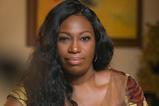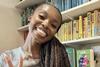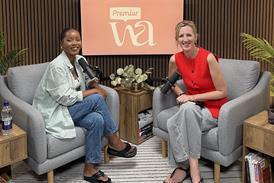


In this month’s Author’s Corner, Claire Musters speaks to British-Nigerian novelist Jendella Benson about the unexpected email that re-sparked her childhood dream of becoming an author. Jendella shares how she fits writing around motherhood and a full-time job, and why her Christian faith shapes the stories she feels called to tell.
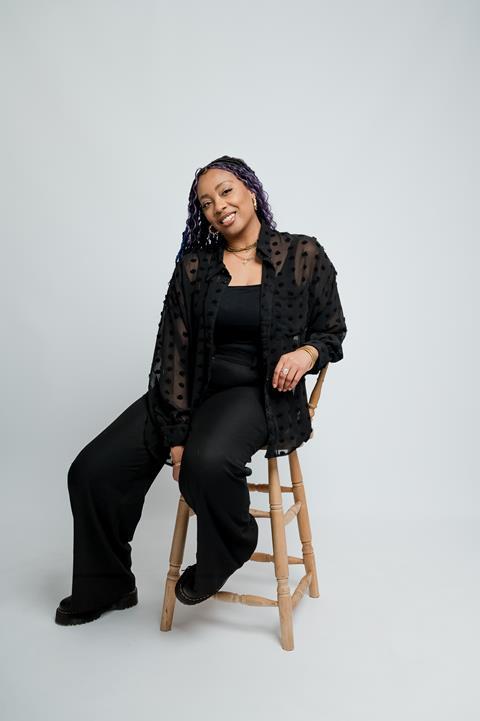
Jendella Benson is a British-Nigerian author of two novels, Hope & Glory (2022) and All That We’ve Got (2024). She has written for The Sunday Times STYLE, The Guardian, The Telegraph and The Independent and is head of editorial at Black Ballad. In 2023, she was a judge for the AKO Caine Prize for African Writing and is on the advisory board for the award-winning Round Table Books in Brixton.
Have you always been an author, or did you start off with a different career?
Writing books was the first thing I ever wanted to do as a child, but I took quite a circuitous path to get here. I tried writing a novel as a child and was quite discouraged when I didn’t finish it, so I turned my interests elsewhere and ended up studying graphic design and photography at university. After I graduated, I worked as a freelance photographer and filmmaker before eventually returning my attention to writing after giving birth because running up and down London with photography equipment wasn’t practical with a newborn.
Nowadays, I’m fortunate to have a full-time job as an editor working with journalists and non-fiction essay writers, and I get to write my books alongside that.
How did you land your first book deal?
An editor at a publishing house read some of my freelance writing work and sent me an email asking if I’d ever considered writing a book. That interest re-sparked the childhood dream and I began developing an idea for a novel. I asked some writers I knew for agent recommendations and then met my agent and signed with her. I continued developing and working on my novel with her support, and eventually it went out on submission to publishing houses the week we went into the first lockdown. That sounds like a really straightforward path, but it wasn’t a quick process by any means. I think it took four years in total from the editor approaching me until I actually signed my deal. Then another two years before my debut novel was out in the world.
What genre do you like writing in most?
I like contemporary fiction. I think it’s such a great way to examine our current condition as a society in a way that feels pressing but also with a bit of distance. One day I’d like to explore historical fiction, but for now I’ve got too many thoughts and feelings about what’s going on right now.
Do you carve out time each day to write, or do you simply write when the mood takes you – or when you have a few days off from other work?
My philosophy is by whatever means necessary. Everything that I write begins in the Notes app on my phone because that’s the most accessible way to start. It’s also less psychological pressure if I tell myself I’m just jotting stuff down in my phone. Then I copy and paste the first draft in sections as I write into a document on my laptop. The first draft is always a bit incoherent and embarrassing, but that’s the necessary path to writing something that’s actually good.
I find it hard to carve out time with so many competing commitments – motherhood and a full-time job, etc. – so I just start by trying to squeeze in writing time whenever I feel like I have mental space to do it. If that means writing on my commute, or editing in the car while I wait for my kids to finish their extra-curricular activities, then so be it. I’d love to do a writing retreat though; that’s on my bucket list – God willing.
When I feel like I’m getting close to finishing a book, I might take some annual leave or schedule a few days when my kids are with family members on the weekend to push it over the line. That’s usually right at the very end though – the seventh draft or so.
Could you give our readers a flavour of your latest book?
All That We’ve Got follows the intertwining lives of a young mother and her teenage neighbour whose paths cross one summer’s night. Abi, the teenage girl, is feeling the pressure of her family’s precarious financial position, which pushes her towards some reckless decisions, and Mimi, the young mother, is trying to figure out what her life looks like now that an unexpected pregnancy has taken her life on a different path. When Abi and her friends go missing and their city erupts in flames, Mimi is forced out of the self-protective bubble she created to confront some uncomfortable realities.
How does your faith impact your writing?
Reconciliation feels like a theme subtly undergirding both of my novels so far, and I think that’s directly inspired by my faith in a gospel that not only reconciles us to a redeeming God but can reconcile us with each other. I genuinely believe that writing novels is a calling that I really can’t run from, so I’m trying to be as faithful as possible to the gift that God has entrusted me with, most especially when it feels uncomfortable, uncertain or misunderstood.
What excites you most about Black History Month, and how do you see your own work contributing to it?
The thing that I find really exciting about Black History Month is that it’s an opportunity to discover so many new stories about our diverse communities. We always like to say “black people are not a monolith” and one of the best ways that is represented is through all the diverse stories and experiences that you can read, particularly through literature, but also through TV – the Small Axe anthology series on the BBC is just one amazing example – journalism, music, film and so much more. From historical record through to contemporary culture, there are so many amazing lives and experiences to discover and learn more about. I hope that in some way I’m contributing to that ongoing record through my own work, particularly from the perspective of British-Nigerian experiences.
What type of books do you like to read in order to unwind, and do you have a personal recommendation for our readers?
I can read quite eclectically, but I generally enjoy literary fiction with compelling characters. Recently, I read It Comes In Waves by Rukky Brume and Kin by Tayari Jones – both really moving and emotive books. If fiction isn’t moving you in some way, then I don’t know what it’s good for ultimately.
I’m not so big on non-fiction, if I’m honest, but I’ve been blessed to read some thought-provoking non-fiction from a Christian worldview recently as well. Can I Say That? by Brenna Blain and Church Girl: A Gospel Vision to Encourage and Challenge Black Christian Women by Dr Sarita Lyons are two books that really address the things that many of us face in our contemporary world in ways that are challenging but encouraging.
Connect with Jendella:
Instagram: @jendella