
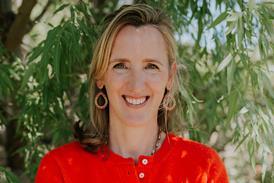



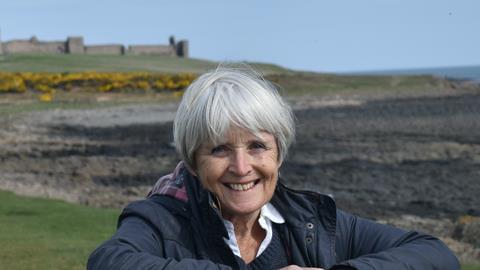

Angie Jones shares the indescribable pain of losing two of her children, alongside the joy of seeing God bring something good out of the sorrow
I was born in 1954, the oldest child with three siblings. My dad was a farm labourer and we lived in a tied cottage on a farm in Coggeshall, Essex. I loved living on the farm and growing up in the countryside.
Then the farm changed hands, and the new owner didn’t want my dad to work for him. That meant he lost his job, and we lost our home within a matter of weeks. My dad managed to get enough for a mortgage, and my parents bought a little house in the middle of Coggeshall. I was about six when we moved into the town, and I hated it. I was used to open fields, and suddenly we were surrounded by houses. I used to cry at night and pray: “Please God, will you move me from this place?”
My mum and dad sent me to the local Baptist church, and so I’ve always believed in Jesus. While sending your children to Sunday school was the thing to do then, they were also involved in the church, and we made friends there who became part of my life.
When school ended, I didn’t really know what to do next, but I knew what teachers did, so I decided to become a teacher. The problem was, I wasn’t very good at maths and didn’t have a qualification in it. I had to find a college that didn’t require maths, and I found one in Bognor Regis. I was accepted there and I loved it – the fun, the dances, the clubs – and made some really good friends.
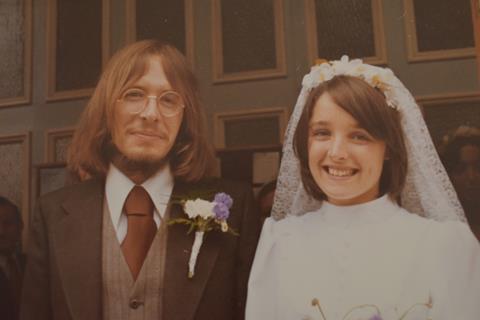
I had several boyfriends, though none very serious. One Sunday evening, I went to church – I’d kept my faith in Jesus all through college – and I arrived late. I slid into the back row and found myself sitting next to a young man with long brown hair and kind brown eyes. He shared his hymn book with me. As I cycled back to my digs afterwards, I prayed: “Lord Jesus, he’ll do.”
Within six weeks, Mogs and I were engaged. (His name is Maurice but everyone calls him Mogs.)
Early married life
Towards the end of my final term, I picked up an out-of-date newspaper in the student common room and saw a job advertised near the house we had already bought. It was even on the same bus route. I applied, and got the job as an art teacher at a secondary school. I left college the next week and we married the week after. I was 21 when we married.
We moved into our little terraced cottage, and everything seemed to fall into place. I taught art for four years. On my first day, I was given a fifth-form tutor group – including some big, strapping lads only a few years younger than me. I climbed up onto a high desk to gain a bit of height and told them to sit down. Someone later said I had an “air of authority” about me, even though I was barely older than they were.
Then our first child was conceived. I stopped work when our son, Ben, was born in 1979. About 15 months later, our second child was born, a little girl called Emily. She had beautiful brown eyes like her dad.
We were happy, though we didn’t have much money. My husband was a social worker, and I’d stopped teaching, so things were tight. We couldn’t even afford to get the car mended, but we were content.
Dealing with heartbreak
In 1985, when Emily was four, we went on holiday to Suffolk. On the way, a speeding lorry jack-knifed and smashed into our car. We were all badly hurt, but Emily suffered head injuries and died in the ambulance on the way to hospital. The three of us, my husband, Ben and I, ended up in another hospital in Bury St Edmunds. Ben had a split duodenum, my husband was badly injured and I was bruised but otherwise all right.
Losing Emily was indescribably hard. Anyone who’s lost a child knows. It was a dark, dark time, but we held on to our faith because it gave us hope that we would see her again one day.
It was difficult going to church. We didn’t feel like singing, and sitting in silence felt awkward, but people prayed for us. Then, in 1988, I found out I was expecting again. I thought: “Oh good. I’m going to have another little girl to replace Emily.” But when the baby was born at home, it was a boy, Simeon. He looked a bit like his sister, and I thought: “He’s a little Emily in a boy’s body.”
When he was six weeks old, the health visitor said he wasn’t growing properly. She told me to take him to the doctor, who listened to his chest and said: “Take him to hospital now.” They found he was in heart failure; his heart hadn’t formed properly. We spent that summer in and out of hospital, and I had to learn to care for him: tube feeding, giving medicines, doing what needed to be done.
Then we heard that a new paediatric cardiologist, a world-renowned children’s heart specialist named Dr Qureshi, had been appointed at Guy’s hospital. He happened to be visiting Bury that week, and we were allocated to him. He looked at Simeon’s scan and immediately knew what was wrong. We felt that he was God’s provision.
Simeon was taken to Guy’s hospital for surgery. They told us there was a 20 per cent risk of death, but without the operation, he wouldn’t survive. While we were there, a child in the next bed died. We knew knew we were in a dark place, but our church set up a 48-hour prayer vigil.
The surgery went well. A few days later the doctor told me: “Your baby has been through major heart surgery without batting an eyelid. You can take him home next week.” I said: “But you told me he’d be here three months.” He smiled and replied: “Well, I got it wrong. It must have been the prayers of your people.” He wasn’t a Christian, but he recognised the power of prayer.
We took Simeon home on 5th November. As we drove home, fireworks lit the sky, and it felt like everyone was celebrating with us.
Each year, Simeon had a check-up, and every year he was fine. He grew tall and strong – a good sportsman. When he was 15, the doctors said his heart was doing so well that he wouldn’t need another check for two years.
Not long after, one of my colleagues was getting married in Ireland and invited us to the wedding. Ben, who was at university, came home with friends to stay with Simeon while we were away. As we left, I had a feeling of unease, a sense that something was wrong, and I hugged Simeon several times. I said to my husband: “Do you think we should go?” But everything was booked, so we went.
This life is not the end of the story. There’s more to come.
That night, in our Belfast hotel reception, the phone kept ringing, but no one answered. In the morning, there was a knock on our door – two policemen came to tell us that Simeon had died. He’d been playing in the garden with Ben and his friends when he suddenly said he didn’t feel well and collapsed. He died in Ben’s arms.
We had been to church that evening in Belfast, where the sermon was about building your house on the rock. It was a strange and fitting message, for, at the time, we didn’t know that another storm was coming.
Simeon’s funeral was packed; the church and churchyard were full, and it was relayed outside. He was loved by many.
Beauty from pain
Ben began meeting with Simeon’s friends to talk and grieve together, and the local Baptist church offered them a room. The group grew quickly.
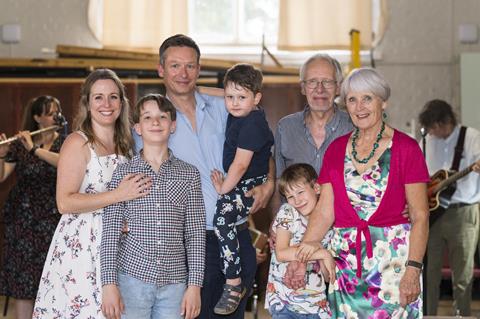
It became too much for Ben alone, so he asked a Christian youth charity to send a helper. They sent a young woman named Sarah, and, in time, Ben married her. Out of the sadness came something beautiful. They now have three little boys.
When the first, Eli, was born I held him in my arms and walked down the same road I’d once walked with my own children. I looked at the little babe and prayed: “God, you knew this would happen one day; that I’d have a child to love again in this place.”
Since then, life hasn’t been without storms. My husband has had heart surgery twice, but God has kept us and held us. We live in hope – the hope of reunion with our children – and every day brings us closer to that joy.
I’ve always loved the passage in Isaiah 61, about Jesus binding up the broken hearted (v1). It’s been precious to us because we’ve known deep sorrow, but also the love of Jesus in those dark places.
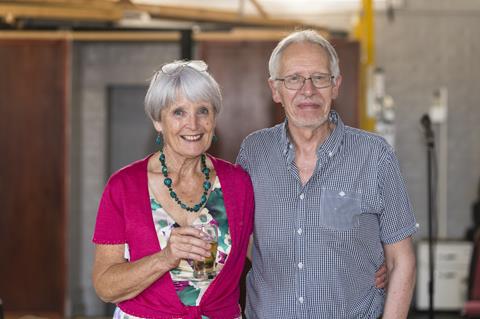
It’s 40 years since Emily died, and Mogs and I celebrated 50 years of marriage last summer. These days we explore villages in East Anglia and write articles for magazines. We also tell our story at churches and Women’s Institute meetings or other local groups.
This life is not the end of the story. There’s more to come. God is just, and he takes the sadness and the tears and will one day bring immeasurable joy in return. Hold on, even when life doesn’t make sense; our time on earth is only the beginning.
Angie and Mogs both help run the North Essex Filling Station (thefillingstation.org/station/north-essex/)
Angie’s two books, Walks in the Slow Lanes of Suffolk and Walks in the Slow Lanes of Essex, are published by Sigma Press (sigmapress.co.uk/south-east-england).
















No comments yet