
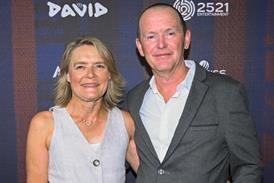




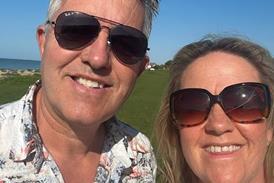
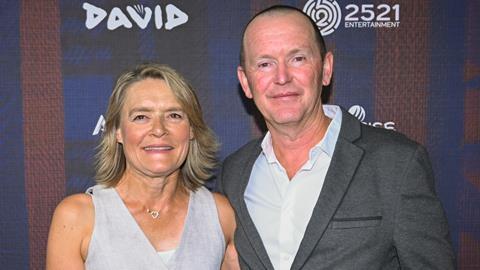

Jacqui Cunningham, film producer and co-founder of Sunrise Animation Studios, spoke with deputy editor Jemimah Wright about how the film David came into being
Alongside her husband Phil, Jacqui has helped build Cape Town-based Sunrise Animation Studios into an internationally recognised animation company, producing projects such as Jungle Beat and the animated musical David, which grossed over $75 million in North America within its first four weeks. She is passionate about faith-driven storytelling, mentorship and developing creative talent.
When Jacqui reflects on the journey behind David, she doesn’t begin at the beginning but the end, at the world premiere in Utah in 2025.
“There was a massive surprise waiting for my husband Phil and me,” she recalls. “The man who was best man at our wedding had flown from London just to surprise us and watch the movie with us.”
After the screening, he stood up and told the audience a story that reached back 37 years, to a time when he, Phil and another friend had canoed down the Zambezi River. “He was the very first person Phil ever shared the dream of making the David story with,” Jacqui says. “It just felt so complete. Like a loop had closed. Full circle.”
Before the film
Jacqui met her husband Phil at university in Pietermaritzburg, Natal, South Africa. Neither of them had film-making in mind, or even on the horizon.
“I was studying biochemistry and genetics, and Phil was studying agriculture,” she explains. “He comes from a very strong agricultural and missionary family, deeply rooted in Zimbabwe and Mozambique. Their hearts were always about living alongside people and bringing change that way.”
Their first meeting was unremarkable and memorable at the same time. Jacqui, a year older, was house president at her residence, welcoming new students. Phil didn’t know her at all, but later admitted something unexpected.
“He had this moment where he thought: ‘I wonder if I could marry that girl.’ Which is such a strange thing to think when you don’t know someone,” she laughs.
They officially met months later, both arriving late to a university church camp. “We were sitting in the pastor’s lounge basically glaring at each other, thinking, ‘Don’t talk to me,’” Jacqui remembers. That night, a violent storm hit the campsite, and the two found themselves digging trenches around tents together.
“That’s how we really met, digging in the rain. And from there, we became best friends.”
In 1992, Phil proposed while white-water rafting in Zimbabwe. Ten weeks later, they were married.
A dream that wouldn’t let go
For the first six years of marriage, film-making remained far from their daily lives. They worked in farming – Phil on farms, Jacqui in laboratories – helping to build Zimbabwe’s veterinary infrastructure. But Phil carried a persistent dream.
“He always said, ‘I want to make a movie about David,’” Jacqui says. “But it was never about making a movie. It was about telling stories that point people toward the God we serve, a God who’s expansive, creative, loving, purposeful.”
That longing took shape first on paper. Phil wrote a novel, The Eighth Son, which they self-published, followed by The Legend of the Sky Kingdom. Eventually, the dream became unavoidable.
“We decided to take the step,” Jacqui says simply.
Their first film, The Legend of the Sky Kingdom, was made in Zimbabwe, without training, experience or funding. “Phil literally ran into a friend at the bank and asked: ‘Do you want to make a movie?’ And that’s how it started,” she says. “We had no idea what we were doing.”
They built characters from discarded materials, worked with local artists and learned through failure. “We wrote one script and made the movie,” Jacqui adds. “Which, as you know, is a terrible idea.”
Losing everything…and carrying on
The decision to move to Cape Town in 2005 marked another turning point.
“Zimbabwe just wasn’t geared for film-making,” Jacqui says. “But leaving was incredibly hard. We loved our community. We loved the people. We didn’t leave because we were unhappy.”
The move cost them everything. “We lost it all,” she says plainly. “We survived by trading animal feed, and everything else went into media.”
Jungle Beat was born in a single-room office in Cape Town. Slowly, painfully, a studio grew. “It was crawl, walk, run,” Jacqui says. “And the early years were very tough. There was no money, no glamour. People joined us because they believed.
Never giving up
Asked why they persisted through a decade of struggle, Jacqui doesn’t hesitate. “It was belief,” she says. “There’s a verse in Isaiah 49 that carried us.”
She recites it almost instinctively: “It is too small a thing for you to be my servant to restore the tribes of Jacob…I will also make you a light for the Gentiles, that my salvation may reach to the ends of the earth” (v6).
“We believed media, especially animation, could cross race, culture, language and generation,” she says. “Stories are powerful. You might forget a sermon, but you never forget a story.” Along the way, they learned something unexpected. “We thought Goliath was fame and fortune,” Jacqui reflects. “But Goliath is within. The biggest battles are internal.”
In 2020, just as David was underway, the world shut down. “We lost all our funding overnight,” Jacqui says. “My colleague and dear friend, Rita and I had to call over 100 people and retrench them. It was heartbreaking.”
Yet that collapse led to a reset. Crowdfunding followed. Angel Studios stepped in. There were challenges, legal complexities and painful uncertainty, but no bitterness. “Our investors were incredible people,” Jacqui says. “And God worked it all out.”
What mattered most was finishing the film.
Layers of meaning
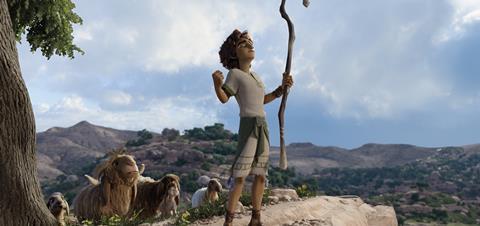
The richness of David lies in its layers – something Jacqui was intentional about from the start. “We did three research trips to Israel and worked closely with a rabbi, down to details like what food existed at the time. One incorrect chicken drawing got rejected,” she explains.
“Every detail was fact-checked. We want people to feel like they’re in Israel. Jewish viewers have told us they recognised places instantly. Nothing was accidental. If people feel like they’re in Israel without being told, then we’ve done our job,” she says.
Hidden throughout the film are symbols: three doves for the Trinity, a butterfly that represents transformation, a stag drawn from Song of Songs. “We hid it all quietly,” Jacqui says. “The more you watch, the more you see.”
Letting go of a 30-year-old dream
When David finally premiered, Jacqui felt something unexpected. “I’m a biochemist, my brain works in numbers,” she says. “And I felt like God gave me four children.” She has three biological children, two girls and a boy. The fourth, she realised, was David.
“When the film premiered, we flew home the next day for my youngest daughter’s graduation,” she recalls. “Watching her, I suddenly knew, all four of my children had left home.”
What followed wasn’t emptiness, but renewal. “This year, I feel like I’m in my 20s again,” Jacqui says. “With this sense that God is doing something new.”
For Jacqui, David was never hers to own. “It’s not Phil and Jacqui’s story,” she says. “It’s God’s story.”
Over 500 people contributed to the film – more if you count orchestras, producers, musicians and crews across continents. “We’re a body,” she reflects, “and the more we work together, the bigger the story becomes.”
Thirty years on, the dream has been released into the world, not as an ending, but as an offering. “When you’ve stewarded something with all your heart,” Jacqui says quietly, “letting it go is actually very freeing.”
DAVID is streaming exclusively on the Angel Studios website and the Angel App. @sunriseanimationstudios


















No comments yet