


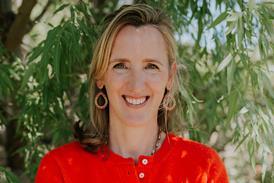







Rhiannon Goulding shares how her adopted son came to feel a part of their family – and how this mirrors our own stories of faith
One evening, my adopted son was watching Paddington in Peru, where Paddington Bear travels with the Brown family to search for his Aunt Lucy, and finds his birth family.
The Browns sit on a log and watch Paddington, very much at home with all the other bears, at the orangery where marmalade is made. They are resigned to saying goodbye to him, when he comes over with a jar of marmalade for them, and asks if he can stay. “Of course”, they say, through their tears. He explains that he wants to go back home with them, because they are now his family.
“This is where I’m from – but you’re where I belong,” he says.
At the end of the film my son turned to me and said, “Mum, I’m just like Paddington. That’s not my family, but you are. I’m a Goulding now”.
My heart melted. Adoption is seldom
straightforward: you want your adopted child to feel chosen and loved, but they also have to know about their roots. It’s a delicate balance, so the fact that he acknowledged that he had a birth family, but he also knew he truly belonged in ours, felt like a huge achievement.
Looking back as well as forward
One of the jobs I do is work as an independent panel member for a local authority, making recommendations on approval and review of foster carers. The work is guided by legislation and guidelines, including national minimum standards and fostering regulations. Care is required to be tailored to each child, valuing them and their unique potential. The aim is to give every child an understanding of their background, so they can build a positive view of themselves, and develop emotional resilience.
Foster carers and other professionals working within fostering also try to maintain relationships with birth parents and the wider family, if possible. This all results in helping a child grow to maturity, as we must ensure that they understand why they are in care – to know not only where they are going in the future but also where they are from. This isn’t just to do with race and culture (though those are important), but also the social, emotional and early childhood experiences that have shaped their lives so far.
Without a knowledge of our background, we can’t go forward – it’s fundamental to knowing who we are.
Adopted into God’s family
This rings true for our story as Christians: “The Spirit you received does not make you slaves, so that you live in fear again; rather, the Spirit you received brought about your adoption to sonship. And by him we cry, ‘Abba, Father’” (Romans 8:15). We may have emerged from darkness, but now we walk in light. God chooses us, loves us and sets us in families, which may not always be biological. “God sets the lonely in families, he leads out the prisoners with singing” (Psalm 68:6). Adoption isn’t just about papers – it’s about identity. It’s about hearing “You belong”, even when DNA says otherwise.
Church at its best becomes another family, of Christian brothers and sisters who love and support each other. For those who grew up in difficult circumstances or who have become estranged from their biological families, this can be a vital part of their faith life. In many ways – for both children and adults – the people around us shape and create us. We may not learn the ways of faith from our original family, but our Christian family can guide us.
This is where I’m from – but you’re where I belong
In this sense, every Christian knows what it’s like to be adopted – to be taken from a situation that may not have turned out well, and be given a new identity and a new inheritance. We have been chosen and loved: “For he chose us in him before the creation of the world to be holy and blameless in his sight. In love he predestined us for adoption to sonship through Jesus Christ, in accordance with his pleasure and will” (Ephesians 1:4-5).
God’s heart for family
Adoption has a great foundation, not in adults adopting children, but in God adopting us! And just as we bring all the experiences of our lives before we came to faith as part of the ‘me’ I offer to Jesus, so our children bring all their early life experiences into our family. Parenting them is never simple. But family really matters to God, to Christians and to churches, and that centrality of love is a positive thing that enables a child to grow.
On my bathroom window I’ve stuck a phrase: “Our vibe is our tribe”. I’ve learned that this is true not just in families by birth but in all communities of faith. It’s not where we’ve come from – it’s who we grow with, love with and stand beside that makes us family.


















No comments yet