


Living in Romania, Israel, the UK, US and finally settling back in Israel, Romanian-born Eti Zadok has lived through war and ill-health – and says she has learnt to trust God through every experience
I was born in communist Romania, to a Jewish father and a Christian mother. My father became a Christian, or what people used to call a ‘born-again Jew’, when he was about 19, and then he met my mother.
I grew up in a God-fearing home, surrounded by a very large family from my mother’s side. We attended a Baptist church. From as early as I can remember, Israel was always spoken about in our home. My father loved Israel deeply and felt very connected to his Jewish roots. We were also involved in the Jewish community, and my father was known there as ‘the baptised Jew’.
I remember going to the synagogue for different events, and my parents worked with and for the Jewish community. But when my parents decided they wanted to immigrate to Israel, everything changed.
Trying to leave
My father applied for permits to leave Romania and to immigrate to Israel, but the rabbi sent a message to the Israeli embassy, saying that my father was baptised and that we were therefore not Jewish. That became a very serious problem. For ten years, our applications were refused. This process had already begun before I was born, and it continued throughout my childhood.
Eventually, the Romanian government became fed up with my family repeatedly trying to leave the country. At one point, they actually revoked our citizenship for six months. My parents were not allowed to work. We were essentially stateless, which is illegal.
Through the intervention of the Canadian Embassy, something shifted. Israel didn’t want to be embarrassed internationally, and we were finally allowed to immigrate. But my father was not recognised as a Jew, so we came to Israel as non-Jews.
People sometimes ask me whether I experienced anti-Semitism or racism growing up in Romania. Honestly, I don’t remember anything like that. What I remember much more clearly is the persecution my parents experienced as Christians. That was the hardest thing.
The Jewish community in Romania was actually quite protected at that time. Apparently, the Israeli government bribed the Romanian government, both to allow Jews to leave and also to ensure they were treated well.
There was anti-Semitism, of course, but I didn’t feel it personally. Maybe it was because we were connected both to the Jewish community and the Christian community. I remember feeling safe. I don’t have bad memories of that time.
What I do remember very clearly is how oppressive it felt to live under a communist regime, even as a child. That sense of restriction, of being watched, of not being free, left a deep impression on me. My parents didn’t leave Romania because of anti-Semitism. They left because they loved Israel. My father deeply loved the land. And my mother had her own story.
When she was young, she had a dream, or maybe a vision, of Israel, specifically of Beersheba, of the place where Abraham lived. She felt that God had shown her that place. That stayed with her. Later, when we immigrated, we ended up living in the south, in that very region.
A new life in Israel
We immigrated when my brother was 16 and I was almost ten. We didn’t know anyone. We came from a large, close church community, with many cousins and extended family, and suddenly we were completely alone.
For me, the transition was surprisingly easy. I was young and very motivated. I remember landing at the airport, taking a taxi and seeing all these strange letters on signs, Hebrew letters, thinking: “I want to know what that says.”
I learned Hebrew very quickly. I went to a special language class in primary school with other immigrant children, and soon I was placed into a regular classroom. For the first time in my life I heard English, and fell in love with the language immediately. Hebrew and English seemed to form pathways in my brain at the same time.
For my brother, it was much harder. Being a teenager, the transition was painful for him.
I became a Christian in a personal, conscious way when I was 16. We were part of a small Messianic congregation in Beersheba, and, through that, I became involved with missionaries who were starting the first Messianic summer camps in Israel.
I started attending the camps, then became a counsellor, then a teacher. Even today, I still go every summer and teach at least one week in the camps. Those camps were instrumental in my spiritual formation. Being with other young believers, people like me, was life-changing.
Serving in the army
When I finished high school, I went into the army, like everyone does in Israel. I served for two years. The army was a deeply formative experience, but also a very confusing one. It forced me to confront my identity in a way I never had before. Being a believer, being a non-Jew by official definition, raised many questions.
I was interrogated many times. There was suspicion. At that time, if you weren’t Jewish, you were seen as a potential threat. I remember being asked directly, “Do you want to convert? If you convert, everything will be easier for you.”
That created a real crisis for me, of identity and faith. I had already come to Christ, and suddenly I was being told that to be ‘complete’, to belong fully, I needed to become Jewish. That experience gave me a deep heart for soldiers, especially Messianic and Christian ones, who often face the same struggles.
I wasn’t personally in physical danger during my service. At that time, women weren’t in combat roles. It was the end of the first Lebanon war. In my second year, I served in an infantry unit as an administrator – secretary to a high-ranking commander.
I met many soldiers, many officers. Over the years, I would read their names in the newspaper, killed near Gaza, killed in Lebanon. I wasn’t in danger myself, but many of my friends were.
A time for studying and grounding identity
After the army, I went to England to study at Bible college. Through connections in the Messianic congregation in Jerusalem, I was offered a place at Capernwray Hall, part of Torchbearers. It was fully sponsored. I didn’t have to pay anything. For me, it was exactly what I needed – a quiet place to ask: “Who am I?”
I remember walking through the green hills, praying, seeking God. I didn’t lose my faith in the army, but it had been shaken, tested. That year helped me become rooted, grounded in Christ, not in labels.
After that, I was offered a job at a Christian study centre in Jerusalem, and I lived there for a year. It was another gift, living in Jerusalem, surrounded by believers, working in meaningful ministry. During that time, I applied to university and was accepted into the physiotherapy programme at Ben-Gurion University in Beersheba. It’s a four-year programme.
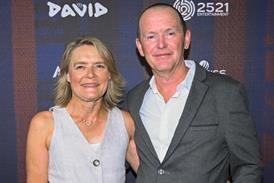
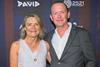
During my third year of studies I met my husband, David, at a prayer meeting. I was very involved in the body of believers, student ministry, summer camps, church life. I knew almost everyone. And then I saw him and thought: “Who is that? I don’t know him.
He was an officer at the time. He noticed me too and called my pastor to ask about me before even approaching me. On our second date, he told me he was Reformed, which I didn’t really understand at the time, and that one day, by God’s grace, he wanted to study theology in California, at Westminster Seminary. That was 1989. We were married in 1991, after the Gulf war.
David’s story is long and complex. His family are Iraqi Jews, Babylonian Jews. During the second world war, when Iraq was pro-Nazi, persecution broke out. His grandmother and aunt fled to Iran. His father stayed behind and later came to Israel as a teenager.
My husband grew up mostly in Iran, raised by his aunt and uncle because they couldn’t have children. He moved between families, identities, countries. Later, he was sent to a boarding school in San Diego, where he encountered the gospel through the Navigators ministry.
Becoming parents and moving again
Before having children, we were very busy, serving in church, travelling, building careers. I worked as a physical therapist, specialising in neurological rehabilitation and geriatrics. It was demanding and fulfilling.
Getting pregnant was difficult, but we eventually had three children: two daughters and a son. Our first daughter, Maayan, was born in 1997. Her name means ‘spring of water’. Our second daughter, Hadas, was born in 1999. Our son, Meidan, was born in 2004. His name relates to flowing water as well; we seem to have a theme.
Life was good. Comfortable. But not balanced. When my husband turned 40, we left our jobs and moved to California to study at Westminster Seminary. Everyone thought we were crazy. We became poor students. I stopped working. We lived simply. Our son was born there; a complete surprise after years of fertility struggles.
Sharing God’s light in the everyday
We returned to Israel in 2006, just as the second Lebanon war began. In 2008, a missile landed three houses away from ours. My son was deeply affected. Trauma leaves marks. In recent years, our daughters have served in the army, and now our son is serving in Gaza. I have peace that is only a gift from God.
In March 2022, I was diagnosed with colon cancer. Three months earlier, my husband had survived a heart attack. Those experiences strip life down to what matters.
Today, David is the director of a Christian publishing ministry called HaGefen Publishing and pastor of Grace and Truth Congregation, Kanot, Israel. I serve along with him, teaching Shabbat School (Sunday school). I am also involved in mercy ministry and counselling.
What have I learnt? To trust God. To let go of fear. To focus on what is eternal.
I return often to Galatians 2:20: “I have been crucified with Christ and I no longer live, but Christ lives in me.” That has been my anchor.
I want people to know this: God is at work in Israel. The Church is growing. People are coming to faith. Babies are being born. Light is still breaking through. Please pray for us, that we would be faithful witnesses, and that Christ would be known in this land.
Grace and Truth Congregation: graceandtruth.org.il/en/ HaGefen Publishing: ha-gefen.org.il/en/










No comments yet