









Nellah Grace looks again at Proverbs 31 and asks whether we’ve misunderstood its message. Could it be less about perfection and productivity, and more about wisdom?
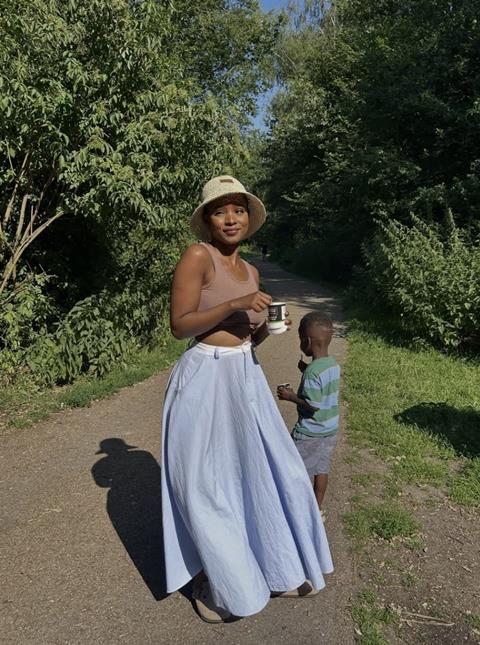
For years, Proverbs 31 has been held up as the ultimate blueprint for the “perfect” Christian woman – but what if that was never the point? Nellah Grace invites us to look again at the famous passage and discover how wisdom, rather than perfection or productivity, can transform the way we understand biblical womanhood.
“A virtuous woman, who can find her?” The opening line of one of the most famous poems in the Bible, found in Proverbs 31 (starting at verse 10), makes a lot of us roll our eyes or switch off.
I don’t know when in church history this chapter became the hallmark of biblical womanhood, but as a beady-eyed, eager 17-year-old who had just given her life to Jesus and encountered the Holy Spirit for the first time, there was only one choice: dive headfirst into understanding what it looked like to be a “woman of God”. I had a lot of questions.
But over the last decade, I think I’ve come to some answers that have genuinely helped me live a life of fruitful abundance in this area, and it’s probably not what you think. That journey eventually led me to launch a ministry called Biblical Boss Babe, and it is my desire to share what the Lord has taught me and, more importantly, how he has held my hand through it in practice.
READ MORE: REAL TALK: How am I supposed to balance career ambition with traditional roles that seem more biblical?
“Woman of God” is an interesting phrase. I think sometimes, as Christians, we create catchphrases that become almost universal doctrine. Before long, we can find ourselves chasing something God never actually prescribed. When I read the Bible, something much simpler becomes clear.
“For God so loved the world that he gave his only begotten Son, that whoever believes in him should not perish but have eternal life.” – John 3:16
Then Jesus calls us friends. Through faith in him, we are adopted into his family and become his children (see John 15:15, Ephesians 1:5, John 1:12, Galatians 3:26, 1 John 3:1).
Friend. Daughter. Those are the primary descriptors that jump out at me when I consider what Jesus accomplished for me on the cross. So where does this idea of a “woman of God” or even “biblical womanhood” come from?
Is it a good or bad thing? And what does it actually mean in practice?
The roles of women in the church have always been a source of hot debate. But our position in God’s heart, I believe, is remarkably clear throughout Scripture. God values women. He created us equal from the beginning. Throughout the Old Testament, he established laws that protected and preserved women. And when we arrive at Proverbs 31, we encounter this beautiful description of a “virtuous woman”. But there is something important about Proverbs 31 that can easily get lost.
READ MORE: I want to get married, but I don’t want to be a wife
Many of us may know this, though I surely did not at the ripe age of seventeen: historically and contextually, Proverbs 31 is an ancient alphabetic acrostic poem.
Many of us may know this, though I surely did not at the ripe age of seventeen: historically and contextually, Proverbs 31 is an ancient alphabetic acrostic poem. The first word of each verse begins with a successive letter of the Hebrew alphabet – something like A to Z – describing this woman of valour. This poem would have been memorised and learnt, particularly by men in positions of influence, as a song of praise for the women in their lives.
And I think, as women, that should make us breathe a sigh of relief, because Proverbs 31 is not a checklist of virtues for us to compare ourselves against to see whether we measure up as a “woman of God”. Instead, it is a celebration of wisdom. The book of Proverbs tells us right at the beginning what it is about: “To know wisdom and instruction, to understand words of insight, to receive instruction in wise dealing, in righteousness, justice, and equity; to give prudence to the simple, knowledge and discretion to the youth. Let the wise hear and increase in learning, and the one who understands obtain guidance.” Proverbs 1:2–5, ESV
Wisdom. Throughout Proverbs, wisdom is personified and described as a woman. And, interestingly, the opposite of wisdom (folly) is also personified as a woman. So when we arrive at Proverbs 31, we are seeing the culmination of this theme. We are seeing what wisdom looks like when it is lived out. Wisdom in action. Wisdom brought to completion from A to Z. Does that mean we can breathe another sigh of relief and say, “Phew! We don’t actually have to do all that”? Well… yes and no.
Yes, because Proverbs 31 isn’t a checklist. But also no, because while it isn’t necessarily prescriptive, it is descriptive of what it can look like to live a life marked by virtuous wisdom. It is wisdom personified. And perhaps that is why this “woman” appears to do so much. She is not simply a picture of everything a woman must accomplish. She is addressing the different areas of life in which wisdom can be expressed.
READ MORE: ‘God told me to be famous at home’: Why one influencer walked away from YouTube at the height of her success
Work, family, finances and business, generosity, strength, diligence, speech, character, fear of the Lord. It’s not a coincidence that Proverbs 1 starts with “the fear of the Lord is the beginning of wisdom” and then Proverbs 31 (the last chapter in Proverbs) ends with “charm is deceptive and beauty does not last, but a woman who fears the Lord will be greatly praised”.
THIS is the point – WISDOM rooted in the fear of the Lord. It’s pointing us back to the centre of Scripture. God himself. When this finally clicked for me, it changed everything. It is a picture of what it can look like to become a person of valour and strong character. And it certainly isn’t simply a blueprint for becoming a domestic trad wife, something that becomes clear when you actually read the chapter closely. This “woman”, also known as wisdom, buys fields. Wisdom trades from afar when needed. Wisdom makes multiple investments so as to be prepared in all circumstances. Wisdom provides for its household. Wisdom is generous to the poor. Wisdom creates. Wisdom is not passive. Wisdom is fruitful.
Over the last decade, I’ve studied, prayed and asked God how to actually apply these principles to my life.
Over the last decade, I’ve studied, prayed and asked God how to actually apply these principles to my life. And, as you might expect, God’s answer was remarkably simple: Apply wisdom. So I began reading not only Proverbs 31, but the entire book of Proverbs – several times over the course of each year. And I realised that there are habits and virtues scattered throughout Proverbs which, when applied practically to our lives, can help us live the abundant life God has called us to. After all, that is the point. That is what Jesus came to do. He says himself, “I have come that they may have life, and have it abundantly.” John 10:10b.
Proverbs 31 should lead us to live an abundant life, not a burdened one. It is the enemy who comes to steal and kill and destroy, and I truly believe he has attempted to do this to wisdom. We should celebrate the incredible gift God has given us in his Word. My study has led me to identify ten virtues that I believe are beautifully described throughout Proverbs 31. And over the next few articles, I want to share what these are and how they have unfolded in my own life in such a life-giving way. I thought I would arrive at “woman of God” – who does it all and is just absolutely crushing it in her own power, a general domestic powerhouse, if you will. But actually, I arrived at daughter and friend. And what a wonderful identity that is.
So this is what I want to leave you with. If you have ever had (or perhaps still have) a strong, negative, visceral reaction to the idea of Proverbs 31, I understand you, and I want to encourage you to stay. Stay long enough to look again, because perhaps we need to reframe the way we see this chapter and return to something closer to its original intent. Don’t let the enemy steal the joy that God’s Word brings, don’t let him kill the dreams and desires God has put on our hearts, and don’t let him destroy our identities in Christ.
And when we do come to a closer understanding of this chapter, I believe it can do what all Scripture is intended to do: transform us from the inside out. Because in the end, it is all about Jesus. And He is the one we are to meet.





















No comments yet