
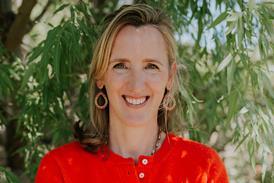





Domestic abuse recovery specialist Sally Hope examines the facts behind the Abortion Act 1967 and the reality of illegal abortion cases. She says it could protect some of the most vulnerable women—raising important questions for Christians about justice, compassion and what it really means to be pro-life.

For an alternative Christian view read this.
Many Christians are concerned that decriminalisation has changed the parameters of the Abortion Act 1967 and that abortion is now legal up until birth. This is untrue. Providing an abortion outside of the parameters of the abortion act, such as after the 24-week time limit (unless there are extreme medical circumstances) is still a crime that carries a life sentence.
What has changed is the way we deal with the women involved in these rare scenarios. When I say rare scenarios, I mean that between 1861 and 2022 only three women had ever been convicted of having an illegal abortion. And even with the dramatic rise in prosecutions since 2022, we are still talking about less than 10 women. I’m writing to tell you that, contrary to what campaigning organisations would have you believe, women overwhelmingly do not want to have abortions very late in their pregnancies or without medical intervention.
There are a number of factors that may lead to a woman, or girl, having an illegal abortion. The most obvious one is coercion. Abusers, traffickers and pimps may coerce their victims into abortions, buying pills online and forcing them to take them. Similarly, they may prevent their victims from accessing legal abortion care, leading to those women and girls desperately seeking out other methods.
There is no public interest in prosecuting vulnerable and desperate women who have often faced violence and abuse because they terminated their pregnancies illegally
Mental health reasons could also lead to women using illegal abortion methods. Women in such situations are usually terrified and desperate. Homeless women similarly may have difficulty monitoring their menstrual cycle so they may not know when they conceived, or they may not have consistent access to a phone in order to make medical appointments.
What women in these situations need is compassion and treatment, not prison. There is no public interest in prosecuting vulnerable and desperate women who have often faced violence and abuse because they terminated their pregnancies illegally. Even strongly pro-life countries with strict abortion laws, such as the USA and Poland do not criminalise women. Since America has repealed Roe vs Wade the most vehemently pro-life organisations have made clear they do not wish to see women prosecuted. Marjorie Dannenfelser, president of the Susan B. Anthony Pro-Life America (formerly SBA List), stated in 2016: “We have never advocated, in any context, for the punishment of women who undergo abortion…let us be clear: punishment is solely for the abortionist”.
If a woman has been coerced into taking abortion pills she needs medical care, but if she fears being arrested and charged she is unlikely to seek out that care. Criminalisation does not protect the unborn (something I will come to later) but it does put the lives of their mothers at risk.
It’s not just the small handful of women who have illegal abortions who are harmed by laws which criminalise abortion. Abortion providers estimate that for every woman charged with having an abortion, a further 10 are investigated. These are often women who have had miscarriages or stillbirths. Grieving women, facing the most painful and traumatic experience of their lives are being arrested, having their homes searched and their phones and laptops confiscated. In some cases, their children are removed from their care, and they are jailed whilst investigations take place. Some of these stories are harrowing, one woman reported that having called an ambulance because her baby was born at home prematurely, seven police officers arrived and started to search her bins, providing no assistance whilst she gave mouth-to -mouth to her baby who was still attached by the umbilical cord. Other stories have involved women being arrested when they are still needing medical care, and many of these stories involve vulnerable teenage girls.*
There is no evidence that decriminalising abortion will cause the numbers of people seeking abortion to rise
Even when investigations exonerate women, they remain on their record. Whenever a DBS check is carried out it shows that they have been investigated for a violent crime, affecting their careers for the rest of their lives. Decriminalising abortion will prevent these witch hunts and protect this much larger group of women.
I understand some people may be concerned that in decriminalising abortion to protect hundreds of vulnerable women, this will cause the numbers of abortions to rise and will essentially sacrifice the lives of the unborn in their place. But, this is not the case.
There is no evidence that decriminalising abortion will cause the numbers of people seeking abortion to rise. Most abortions take place within the first 10 weeks, only 1% take place after 20 weeks and only 0.1% after 24 weeks. Women do not need deterring from late term abortions because women do not want to have late term abortions in the first place. Moreover, research consistently finds that countries with stricter abortion laws have higher rates of abortion. I remain convinced that criminalising abortion does not reduce it, it simply makes it more unsafe.**
As a Christian, I understand the desire of other Christians to see a world free of abortion, however the answer to abortion is compassion, not legislation. I’ve worked with women in the most horrific circumstances, facing the most horrific decisions. Many of us will never experience this. We may disagree when women see abortion as “the lesser of two evils” but the answer to that problem is not to force them to make the choice we believe is the best one. The answer is to stop them having to face that choice in the first place; the answer is to remove the thing they perceive as the “greater evil”.
We can be pro-life by seeking to create a world where women are not so disproportionately affected by poverty, 57% of those who have abortions state that they are affected by financial factors, and those living in deprived areas are twice as likely to seek an abortion.***
We can be pro-life by seeking to create a world free of violence against women and girls, another leading cause of abortion, or by campaigning for better maternity support and better access to education. All these things would have far greater impact on reducing abortion numbers and saving the lives of the unborn than criminalisation.
Read more:
*https://bills.parliament.uk/publications/53621/documents/4252
**https://www.who.int/news-room/fact-sheets/detail/abortion
***https://spuc.org.uk/wp-content/uploads/2025/10/Abortion-and-Poverty-Sept-2025.pdf
If any of these issues have affected you, you can call Premier Lifeline for support. Premier Lifeline is a national, confidential helpline offering a listening ear, emotional and spiritual support from a Christian perspective. If you would like someone to talk with and pray for you, call Premier Lifeline on 0300 111 0101.