








Jamie Phear encourages us to see the wilderness as preparation rather than punishment, as training rather than abandonment
As April begins this year, Holy Week begins with it, drawing us toward the cross and the promise of Easter morning. Over the past 40 days as Christians, we have walked the Lenten path together.
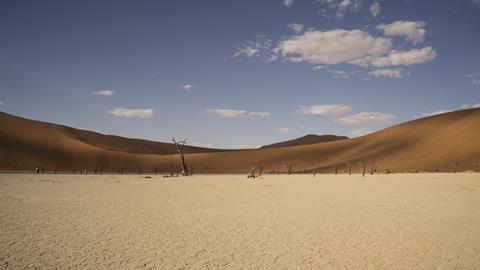
As I reflect on Lent, I find myself drawn not first to the cross, but to the wilderness – the place we long to avoid, yet the very place God so often uses to form us. The Lenten journey does not begin at Calvary. Before we enter the grief of Good Friday, the quiet waiting of Holy Saturday or the celebration of Easter Sunday, we are invited to walk with Jesus in the wilderness. The wilderness is not an accidental detour in the story of God; it is a recurring pattern.
Perhaps the most prominent wilderness story in scripture is the 40 years the Israelites walked through. You see, God miraculously freed them from centuries of slavery, supernaturally parted the Red Sea and began to lead them toward the promised land. The journey should have taken only a week or two. Yet God intentionally led them into the wilderness for 40 years. Why?
Formation.
A place to be reformed
It only took one miraculous moment to get the Israelites out of Egypt, but it took 40 years to get Egypt out of the Israelites. After passing through the Red Sea – a kind of baptism – God led them into the wilderness. Deuteronomy 8:2 says: “The Lord your God led you all the way in the wilderness these forty years, to humble and test you in order to know what was in your heart”.
The wilderness – the place we long to avoid, yet the very place God so often uses to form us
The Hebrew word for testing here is less like an exam and more like training. God withheld the promised land in order to train them to trust Him – to believe He is who He says He is, to know their belovedness and to walk in obedience as they relied on Him for provision, guidance and steady presence. The wilderness was not wasted time. It was the place where He de-formed the ways of Egypt out of them and began re-forming them into His people.
Later, for Jesus, the wilderness became more than a place of testing; it became the stage on which faithful obedience would finally be lived out in perfection.
Just before the launch of Jesus’ public ministry, He approached a crowded river Jordan to be baptised. The heavens opened. The Spirit descended. The Father spoke: “This is my Son, whom I love; with him I am well pleased” (Matthew 3:17). Jesus’ identity was declared before the testing began. Then immediately, the Spirit led Him into the wilderness to be tempted by the enemy (see Matthew 4).
The Greek word often translated ‘tempted’ can also mean tested – refined, proven. Jesus was not led there to discover who He was, but to stand firmly in who He already knew Himself to be. Where the Israelites grumbled, Jesus trusted. Where they faltered, Jesus stood firm. He succeeded where they could not.
A personal story
Not every wilderness we experience is God leading us into it. Some suffering comes simply from living in a broken world. But sometimes – like Jesus, like the Israelites – God leads us into the wilderness. And I say that not only as someone reflecting on scripture, but as someone who has walked through a wilderness of my own.
On my 36th birthday, I began a six-month sabbatical. What I imagined would be a season marked simply by rest and clarity became ten months of deep wilderness. It was a season that tested my faith in just about every area that mattered most to me. My identity was tested as God surfaced false narratives I had buried about Him and about myself. My trust was tested as I navigated uncertainty and delay. My obedience was tested as I sensed God asking me to lay down a career I had spent a decade building.
If I’m honest, in the thick of it, I couldn’t always see the deep work being done. I didn’t always recognise how the testing was refining me, how God was training me and forming me into a person who could trust Him in all seasons. There were days when fear felt louder than faith and the future seemed completely clouded.
But God was too good to move me into the next stage of my calling while leaving parts of me untended. He was too good to entrust me with what lay ahead without first purifying my heart for His purposes. And the difficult fertility journey I’m walking through now? I don’t think I could face it without the refinement that happened two years ago in that sabbatical – a season I wanted to rush through, but one in which God intentionally took His time.
The wilderness is not the destination
What would it look like if we approached our own wilderness seasons as preparation rather than punishment? As training rather than abandonment? As formation?
I can see now that the wilderness was not wasted. It strengthened a depth of trust I could never have mustered on my own. God uprooted false narratives. He refined my heart. He anchored my identity in Christ, forming me into a woman who could believe He is who He says He is, even in the hardest of circumstances.
And He is faithful to meet you in your wilderness, too.
Wilderness seasons are rarely the ones we would choose. I would never want to relive that season again, and yet, I don’t know who I would be without it. If you let Him, God will form you in the wilderness in ways no mountaintop ever could. He does His deepest work in the desert.
It’s OK if we cannot see His work in the midst of it. It’s OK if doubt and fear rise. We can always turn back toward Him, asking Him to purify our hearts and anchor us in His promises, knowing He will never leave or forsake us.
The wilderness is never the final stop on the journey. As we approach Easter, we look again to the finished work of the cross, knowing we don’t have to get it all right all the time because Jesus did. Whatever we walk through, we know the end of the story. Redemption. That is where our hope rests.
A prayer practice: Remembering who God is
Spiritual formation begins not with changing our circumstances, but with remembering who God is. This simple prayer exercise can be used in any season to help anchor you in the truth of God’s unchanging character.
1. Be Still
Pause for a moment.
Take a slow breath.
Invite the Holy Spirit to anchor you in truth.
2. Notice what feels unsteady
Ask yourself gently: “What feels hardest to believe about God right now?” Is it His trustworthiness?
His love?
His justice?
His nearness?
There is no shame or condemnation here. Simply bring it into the light.
3. Speak truth slowly
Read one of God’s attributes. After each scripture, repeat the simple declaration aloud or in your heart. You can really do this with any scripture – below are just a few examples:
God is faithful “The Lord is trustworthy in all he promises and faithful in all he does” (Psalm 145:13).
Repeat: You are faithful.
God is loving “The Lord is compassionate and gracious, slow to anger, abounding in love” (Psalm 103:8).
Repeat: You are loving.
God is just “…all his ways are just” (Deuteronomy 32:4).
Repeat: You are just.
God is near “The Lord is close to the broken-hearted” (Psalm 34:18).
Repeat: You are near.
God does not change “I the Lord do not change” (Malachi 3:6).
Repeat: You are unchanging.
4. Remain
Stay with the truth that feels most difficult. Repeat just the truth slowly for a few minutes. Let that truth move from your head to your heart through each repetition. Notice what changes in you as you remain, even if the change feels small.
Close by praying:
You are who you say you are.
Form my heart in what is true.




















No comments yet