









Church leader Hannah Stephenson-Kelly considers how social roles, lived experience, and the use of time and space may help explain this perceived gender gap in religiosity.
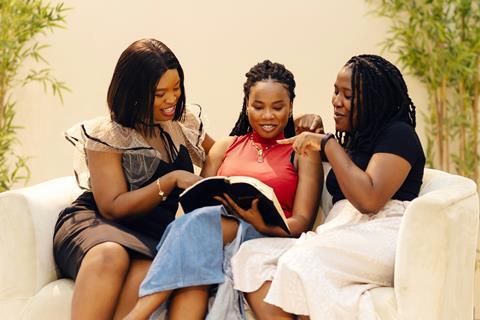
In Gender and Religion: A Survey - coordinated and written by Sacha O. Becker, Jeanet Sinding Bentzen and Chun Chee Kok – it is shown that across religions and cultures there is a general trend towards women being more religious than men. By religious, this report considers the attendance of religious events, the individual affirmation of faith and the practice of religion in the home (thought the latter is the hardest to accurately measure).
Though the breadth of the gap between male and female religiosity does depend on country, religion, educational access, wealth and class, the consistent finding is that women are more religious.
There are of course limits to reports like this, and notably this survey places a heavy emphasis in its research on the Abrahamic faiths
There are of course limits to reports like this, and notably this survey places a heavy emphasis in its research on the Abrahamic faiths: Judaism, Christianity and Islam. Notably within all of these, though especially in Islam, these statistics are hard to evaluate because there are different emphasis for men and women on the public and domestic nature of faith. For example, the study finds that women attend worship services more frequently than men in Christian societies, but in Jewish and Muslim households it is the other way around. But this is not necessarily because men are suddenly more religious, but rather that religious events are often limited to being male only. Yet, in spite of these limits, the theme continues to be one of higher religiosity amongst women.
READ MORE: Is church growth as important as Church growth?
Why then? The report posits a few potential answers, though almost all prove inconclusive when isolated as separate factors. Some of the conditions that can affect the data are the economic allocation of time and the household division of labour, gender roles and socialization, deprivation and compensation (e.g. most women globally have less access to education and their own source of wealth), and the experience of childbirth and motherhood in the context of religion. Several things arise in these trends.
Notably that in the West the gap between men and women being religious narrows when women have greater access to education and work. But nonetheless even in these conditions women are more likely to be religious. Another feature of the relationship between gender and religiosity for Christianity in the west, is that this is one of the few places where there are instances of men now identifying as more religious than women. The statistics from the Quiet Revival also point to this trend amongst young people. Here there lies a question around the relationship to this and the rise of Christian Nationalism amongst a predominantly male audience, but for now this is only a correlation and does not necessarily speak for church attendance. I am personally intrigued by the fact that female religiosity is higher even in spaces where men are disproportionately in positions of religious leadership.
READ MORE: I was a single woman when God led me to plant a church in Portugal
It is beyond the scope of this article to comment on the full breath of the report, but hopefully I can offer some kind of anecdotal response to the above within my own tradition and culture
It is beyond the scope of this article to comment on the full breath of the report, but hopefully I can offer some kind of anecdotal response to the above within my own tradition and culture. I find myself in an Anglican-charismatic tradition in England and anecdotally there are more women than men who are actively involved in the life of the church. However, there is a notable trend towards the narrowing of this gender gap in students and youth. But why historically (and by this I can only speak to the last few decades) has this not been the case within my own tradition? Is it because a charismatic tradition with its emphasis, at times, on the emotive experience, is a more female orientated space? I suspect not, and indeed the survey reveals that it is not so much a matter of how a religion is practiced that effects the gender gap, so much as the space and time women might have in contrast to men in their society and culture. It is time and space that I suspect play a remarkably significant role in the receptivity of women to God.
READ MORE: Archbishop Sarah and the future of Church leadership
Typically, women are still more likely to find themselves in the domestic sphere for more of their life than men. I do not mean by this a vision of the 1950s housewife. The domestic sphere is one of great and often enormously time-consuming labour. It is also, in religious settings, a public as well as private space. Though the quantity of time and space is not necessarily different from that of the labour market, it is a qualitatively different space. The domestic sphere is, at its best, a richly embodied one and often highly communal.
Space and time may not be expansive or empty, but they are richly experienced and tangibly realised. God has set eternity in the hearts of humanity and revealed divinity within the limits of space and time, qualitatively rather than quantitively, in the particular person of Christ. Should we be surprised then, that women who find themselves often (though not always) in the latter are more open to God? I am at risk here of generalising the female experience, but it is my hunch that this is part of the answer to why women are more religious than men. I should also make it clear that I am not arguing that the domestic sphere is necessarily better. Rather that in an industrialised, digitalised world of work, the domestic sphere often remains one of the few spaces where space and time have an emphasis on quality over quantity. Consequently, it is a location where there is room still for mystery. Perhaps the gap would lessen if the world of work were transformed for male and female alike?
Finally, as I leave us to ponder on the role that space and time have to play in our openness to God, I will end with a quote from Dorothy Sayers in her book ‘Are Women Human?’ She meditates on the way that women are constantly drawn to Christ in the Scriptures and posits that the same truth remains for women today.
“Perhaps it is no wonder that the women were first at the Cradle and last at the Cross. They had never known a man like this Man - there never has been such another.’























No comments yet