
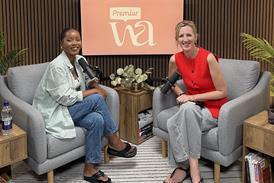




After comments by a popular podcaster reignited debate about Christian home-schooling, writer Tabby Kibugi reflects on her own experience of being educated at home. Far from leaving her sheltered or socially isolated, she says it nurtured her love of learning, strengthened her faith and is something she’d gladly choose for her own children.

Throughout my primary and part of my secondary school years, I was homeschooled.
Recently, when popular American podcaster Jennifer Welch doubled down on comments she had made on her YouTube channel, describing homeschooling as harmful and a “crazy Christian problem” that leads to “trickle-down stupidity”, I became concerned about the message she was promoting. Her remarks have since sparked a debate about whether Christian parents who homeschool their children are sheltering them from the real world and raising them in unhealthy environments.
The conversation was a reminder of the misconceptions I’ve faced throughout my life. Whenever I mention that I was homeschooled growing up in South Africa, it usually elicits mixed reactions. I’ve had colleagues assume that I couldn’t handle work pressure because, according to them, I’ve lived a very soft and sheltered life.
READ MORE: Why do women perform better at school, but men are ahead in the workplace?
Just recently, a neighbour told me she couldn’t believe how outgoing I was because she’d always assumed that homeschooled people have very few social skills.
More than once, I’ve heard the remark: “You were homeschooled? But you’re so well spoken.”
More than once, I’ve heard the remark: “You were homeschooled? But you’re so well spoken.” Some assume that because I was homeschooled, I must have experienced extreme isolation, while others insist my parents must have been free spirits who let me spend my days doing whatever I wanted with very little structure.
READ MORE: ‘A biblical worldview underpins every subject I teach our children’
My own experience of homeschooling looked very different from those assumptions. Between the ages of seven and seventeen, I was taught at home by my parents, who, alongside their other careers, were both trained educators. I was part of a larger homeschooling group, and there were rules I had to follow. Mornings usually began with household chores before I settled into my school day. I had a dedicated study space at home, and a tutor came each day until the afternoon. Every now and then, I’d also attend classes at a nearby school for subjects such as sport that were better suited to a group setting.
My parents were staunch Protestants and wanted my education to be integrated with the Christian faith. Before each lesson, we’d pray together, read the Bible and talk about what it meant to be a disciple of Christ. They also encouraged me to think deeply about the world. Whenever I wanted to discuss current affairs or controversial issues, they never imposed their views on me. My dad would often say: “Some people believe this, some people believe that, and it’s okay not to agree with either.” They taught me how their Christian faith shaped their own convictions while encouraging me to question and examine my own thinking.
READ MORE: ‘I got sacked from a Christian school for having Christian values about marriage’
Looking back, I can see how homeschooling developed my critical thinking skills
Looking back, I can see how homeschooling developed my critical thinking skills, taught me to absorb information quickly, encouraged me to be proactive about maintaining friendships and strengthened my faith. I simply don’t recognise my experience in the stereotype that homeschooling inevitably produces socially stunted people. That’s not to say homeschooling is right for every family. I understand why some people have reservations about it, since there are stories of families who have used homeschooling in controlling ways and adults who have later shared how damaging those experiences were. But those stories should not become the standard by which every homeschooling family is judged.
My own experience has shaped how I think about parenting. If God blesses me with children one day, I hope to homeschool them in much the same way my parents taught me. I’d want to tailor lessons to their interests alongside the required curriculum, encourage them to ask difficult questions, learn alongside other homeschooling families, and raise them in a home where faith and education go hand in hand.
Homeschooling isn’t for everyone, but for me it nurtured my love of learning and grounded my faith in Christ. My own life is proof that homeschooling doesn’t have to produce fearful or sheltered adults. Given the opportunity, I’d love my own children to experience it too.




















No comments yet