





Tabby Kibugi draws on recent events in Scotland and Spain to explore what a truly “good death” might look like and how Christians can respond with compassion, care, and wisdom.
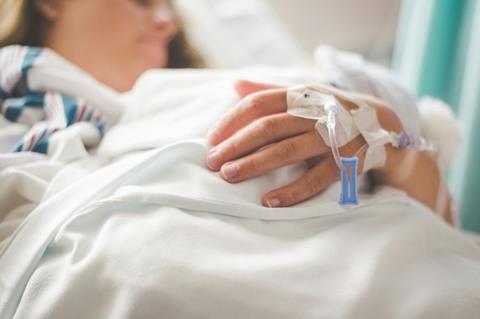
Scotland recently rejected the Assisted Dying bill for Terminally Ill Adults, which would have allowed someone to lawfully request and be provided with assistance by health professionals to end their life. Many Christians responded with relief and celebration over the decision.
Ever since the assisted dying debate began, churches and Christian organisations have been among the most vocal opponents of legalisation.
For many of us, this moment felt like a moral victory. But at the same time, another story on the same issue has recently unfolded. Twenty-five-year-old Noelia Castillo Ramos from Spain was approved for voluntary assisted dying after years of severe trauma and chronic pain following a suicide attempt that left her paralysed.
READ MORE: My thoughts on the assisted dying bill and the sovereignty of God
I remember coming across discourse on this, and for weeks on end, there were mixed reactions to her choice. Many responded with prayer, compassion, and pointed to systemic failures in Spain around trauma care, disability support, and mental health. Others described her death and her choice to go through with it as tragic, wrong, even a “bad death.” In many ways, I noticed that some of the language from the latter mirrored long-standing objections to assisted dying: that choosing death, no matter the circumstance, simply cannot be considered dignified.
But it is this response that prompts a deeper question: what does a good death actually look like?
But it is this response that prompts a deeper question: what does a good death actually look like? When we think of a good death, we often imagine something gentle, final moments spent at home or in hospice care, pain managed, loved ones gathered close, and peace achieved. Hospice, at its best, seeks to offer exactly this, the presence of loved ones in our final hours.
READ MORE: Theresa May said the assisted dying bill is a ‘license to kill’
I’ve watched someone close to me die in hospice care. I’ve seen the strain of it, where staff are stretched and families are simply distressed.
In reality, it’s rarely that straightforward. I’ve watched someone close to me die in hospice care. I’ve seen the strain of it, where staff are stretched and families are simply distressed. In the end, what I had imagined would be a peaceful, well-supported final stretch, where my loved one’s wishes were honoured, looked very different. Their last hours were marked by pain, overstretched nurses, a chaotic ward with visibly panicked visitors going in and out, a blaring television that never seemed to switch off, and only a flimsy paper curtain drawn around the bed when the moment finally came.
It made me realise that while opposing assisted dying is one thing, understanding what we mean by a good death, or whether such a thing even exists, is another entirely. If we are quick to label certain deaths as bad, what are we measuring them against? Is a good death simply one that avoids moral wrongdoing, or should it be something shaped by care, presence, and the assurance of God’s nearness even in suffering?
Romans 14:8 reminds us that, “If we live, we live for the Lord; and if we die, we die for the Lord. So then, whether we live or die, we are for the Lord.” The verse shifts the focus away from trying to categorise deaths as good or bad, and instead offers a more nuanced way of thinking: that both our living and our dying, regardless of circumstances, are simply held within our relationship with God. Even at the end of life, we are not outside of His care.
READ MORE: Theresa May said the assisted dying bill is a ‘license to kill’
Therefore, it’s not enough to say what we are against or to quickly label certain deaths as bad. Some people choose assisted dying after seeing it as the only way out. We aren’t justified in condemning them, whether we agree with the decision or not. If Christians are celebrating Scotland’s decision while simultaneously disagreeing with someone else’s choice of voluntary death, there must also be a moment of reckoning with the conditions that lead people to consider it.
A truly Christian vision of a good death cannot ignore suffering. It must be rooted in care and a commitment to walking with people through their most vulnerable moments. Perhaps it’s time for Christians to reconsider whether our idea of a good death is robust enough to meet the realities people are currently facing.


















No comments yet