


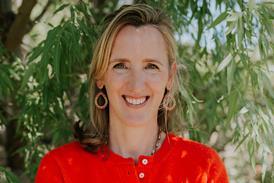






Jo Moir, the new head of Spring Harvest, sat down with our editor Tola-Doll Fisher to talk about what has equipped her for this position and why she is a safe pair of hands for this beloved festival
Tola-Doll Fisher (TDF): In your own words, who is Jo Moir?
Jo Moir (JM): I’m a mum, I’m a child of God. You know what? That’s the most important thing you need to know about me. Sometimes I hear people explaining who they are, and they’ll say: “I’ve got a master’s in this, and I was a midwife, and I’m ordained, and I’m a mum, and I’m a wife and I really like reading,” but actually, I’m a child of God. I’m a returned prodigal. That’s a big bit of my narrative, and I’m just trying to follow God’s calling on my life, like a lot of people who are journeying with Jesus. Just trying to be obedient – sometimes rebelliously obedient – not doing what the world says or what the people around us tell us to be or tell us to do, but following God’s call on my life.
TDF: I like that! You mentioned being a prodigal. What did that look like for you?
JM: I’m a Salvation Army officer’s kid and, like a lot of vicars’ kids, I turned away from faith in my teenage years. My parents were and are extraordinary, and did amazing things – both in the UK and abroad. My mum used to be a nurse and then was ordained. My dad was in management and was ordained, but I, in my teenage years, decided that God wasn’t real. I got in with a bit of a rough crowd, and decided to do life my own way. That was a tough couple of years. I was 15, and the thing for me was how hopeless it was, because without Jesus, without the Holy Spirit, without believing in the Creator God, life is literally without hope.
Ultimately, I have to listen to the voice of the one who called me and chose me
That was my experience for a couple of years, until my parents were given a new appointment to go to Africa. I did not want to go to Africa, so I prayed for the first time in many years, and the Lord heard and answered. The next morning, a miracle had happened and I wanted to go to Africa! It wasn’t a change of mind, it wasn’t acceptance, it was a complete change of heart. That was the beginning of me realising that He was real, He loved me and hope was restored. That was my journey back to faith and choosing it for myself.
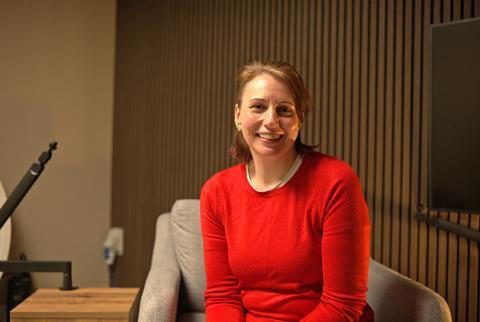
TDF: Wow, that’s an incredible story. How many years were you there and where in Africa were you?
JM: This is where the story gets interesting. So we got moved out of where we were, and right before we were supposed to be heading over to South Africa, the situation changed, and we were sent to Whitechapel in the East End of London.
TDF: That’s a bit different to Africa…
JM: It was not the vineyards that we were expecting, but it was there at a church called Regent Hall that my faith was nurtured. People loved me. My parents were the hostel managers, so I lived in a men’s hostel in Whitechapel, Booth House from the age of 17, and my now husband was then a deputy manager of the hostel. The Lord didn’t waste that experience of not knowing where I was going to go, being frightened about going to Africa. He used it for His glory to bring me back to Him. Then the rest of my life unfolded, and I got the call to nursing.
TDF: What did your professional life look like prior to your new role?
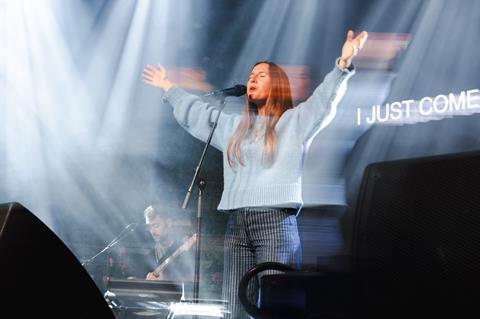
JM: I felt called to become a midwife. I was at a festival. Great things happen at festivals! I think [they create] a thin space where we are ready to receive the call of God. I was at a festival called Roots, and Jackie Pullinger was preaching, and she said: “There’s someone in this room who needs to be a midwife”. And I sat there, 18-year-old me, going: “Oh, she means me. It’s me”. And everyone was like: “Don’t be stupid. You can’t do that”. And I said: “No, I can. She’s talking about me”. From that moment on, God opened all the doors to make it possible for me to go into midwifery. The right university, as I had the right A levels. My mum had been a nurse, so I had [knowledge of] very medical language already. We talked about that kind of stuff as a family. So I was a specialist midwife for ten years, looking after families in crisis, women living with HIV, and teenagers.
Ten years later, God told me audibly that He needed me to become a Salvation Army officer and move forward into ordination. As I followed that journey my husband, who was a child and family social worker at the time, had the same calling, so we went into Bible college together and were commissioned and ordained in 2008 as Salvation Army officers. We did that for 17 years. He’s still a Salvation Army officer. He runs the Salvation Army, Mitcham. He has a double-decker bus instead of a building. Our journey over the 17 years took us into West Scotland, planting, working with gangs, working with schools, working in hospital chaplaincy, because an ordained midwife is a bit of a rare thing. Then recently, God asked me to step into this role at Spring Harvest, a costly decision but all [other] doors [were] shutting – [He was] saying to me, very clearly: “Jo, this is the way, walk in it”.
TDF: Was there a wrestle with that decision? Because you seem to have really enjoyed both those previous roles that you had.
JM: I think that’s a really important question. It comes back to that phrase about being rebelliously obedient. We have so many voices coming at us, don’t we? Whose voice do we listen to? Do we listen to the voice of the people around us? Do we listen to the voice of the people that love us? Yes, we do. But ultimately, I have to listen to the voice of the one who called me and chose me because He knows me best. I [was] rebellious against maybe what my organisation, my own church, wanted for me. I [was] rebellious against what my own family members wanted for me, because I knew it was Him. Because I’d heard His voice before, it was a familiar sound, there was joy in it and He paved the way.
I’m not interested in celebrity, I’m interested in credibility
Six months into the role, so many times God [has said]: “This is why I needed you, Jo”. There’ll be a situation or someone will say: “You’re the head of Spring Harvest, and you have this background”. So I was a midwife, but I also was a mediator, civil and commercial mediator, and being able to help people move forward through discussions and disagreements, being able to communicate was a big part of my role with the Salvation Army. They taught me so much about reaching out to the lost and the last and the least. All of that is coming with me, because God doesn’t waste anything. So there wasn’t a difficult decision, because when you’ve got the choice between the voice of the world and the voice of your Father, you’re gonna listen to your Father.
TDF: I know that in the Salvation Army, you do have male and female leaders, but in the wider Church it is generally male-led. How have you seen women and men lead differently in your areas of work?
JM: In the Salvation Army we have a long history of raising up women in leadership. My own great-grandmother was rescued from a brothel. [At] 14, she was sold by her mum into servanthood; it turned out it was a house of ill repute and the Salvation Army rescued her. She was the first Salvation Army officer in our family in 1890 and, since then, every generation of our family has had either local officers or Salvation Army officers. So I come from a long line of strong women, including my mum who’s a very fiery preacher. But for me, in the broader Church, it’s by their fruits you shall know them. So I’m always listening out for who is speaking the word of God in a way that is speaking to my spirit, in a way that is rooted and grounded in scripture and applies to my life. That, for me, has always been the most important thing when I’m deciding who to follow, and that’s what actually makes a leader, isn’t it? So regardless of gender, regardless of culture, regardless of ability or disability, it’s by their fruits.
When I did my master’s in applied theology, we had to spend a lot of time looking at the dark side of leadership. And I think we are all at risk of finding ourselves in a place of ego. We need good people around us who will call us out, who will challenge us on our behaviour. One of the things I’ve brought to Spring Harvest is that I’m not interested in celebrity; I’m interested in credibility. You might be a really famous Christian, but it’s credibility that the Lord uses, not celebrity.
TDF: The theme for Spring Harvest in 2026 is ‘No greater life’, embracing God’s design for wholehearted love. What new and exciting things can people expect this year and beyond?
JM: We’re in the middle of a trilogy. Last time we did ‘The greatest story’, really unpacking who Jesus is. This second year we’re looking at how should that impact our lives? Our faith and love have to come together. So how do we demonstrate loving God, and how do we reach out to the people around us? There’ll be lots of very practical guidance.
We’ve got some new things this year: women of influence, so CEOs and women doing amazing things in their field, both sacred and secular, telling us how they are loving their neighbour and loving God. We’ve got men of influence, which is the same thing, but talking about how to handle power, how men need to deal with boundaries. And then we’ve got intergenerational influence, how young people can speak to the older generation, how the older generation can impact the younger. So there is lots on holy habits, and hopefully people will leave feeling like they are utterly resourced for living out a life that is wholehearted discipleship for Jesus.
It’s not just 2026 – God is speaking to us about 2027, about 2028. I had a meeting yesterday about 2029. It’s just so exciting the way that the Lord is laying things out and taking us on a journey. So, in 2026, new things are the ‘Curious’ venue, which is a specific space to ask questions like: What does God think about AI? What do we do about the environment? How do we engage with a community, and how do we offer forgiveness within community? How should we manage our money as Christians? There are other new stuff in terms of helping people journey with mental health, asking the questions that matter about power. Spring Harvest wants to make opportunity and space for us to have those conversations that we don’t necessarily have in church. There are lots of fresh but there are lots of familiar too. So, worship leaders that you know and love, songs that will inspire you, resources to take back to your churches, and, the absolute heart of it, really deep teaching from theologians who know their stuff.





















No comments yet