









As millions tuned in to watch The Traitors, Kezia Neusch reflects on why we are so quick to judge others and how easily we can get it wrong. Drawing on psychology, social media and the teachings of Jesus, she explores why we need more humility and less division.
I’m certain no one in my family will forget the conviction with which my five-year-old nephew shot to his feet during our summer staycation, assumed a power stance, pointed at his grandfather, and accused him of being a traitor.
The room erupted. It was one of the most comical moments of our summer together. Having all fallen for The Traitors at different points since its start, we were persuaded by the family’s younger members (who don’t even watch!) to play a real-life version together.
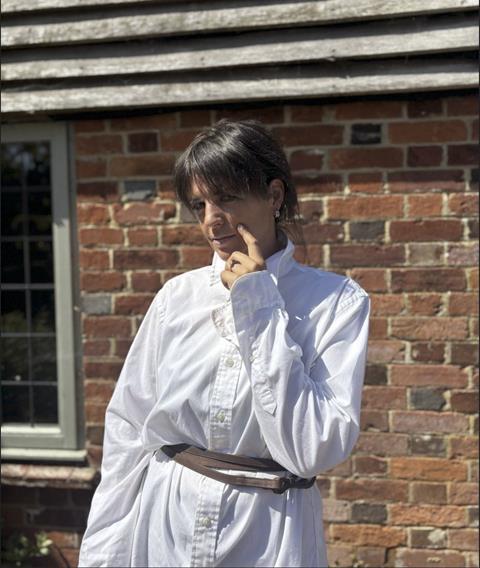
After a night of strategising how this could work across a 70-year age span in a heatwave, I found myself cutting a vision-impairing Claudia fringe, liberally swiping on mascara, and striding towards a round (garden) table, ready to assign my family the roles of Faithful or Traitor.
READ MORE: Can joy win Celebrity Traitors? Miranda Hart is about to find out
My fascination with how we think as a society has taken me back to university, at nearly 40, to study psychology.
As the nation tuned in and analyses the final this weekend, I’ve been pondering deeper reminders from behind those castle walls. My fascination with how we think as a society has taken me back to university, at nearly 40, to study psychology. One of the interesting things this year has been discovering where the evidence sits regarding our ability to spot deception. Fascinatingly, whether it’s a celebrity in a castle, a police officer, or a family member on vacation, our pointing of the finger is less correct than we might imagine.
A major component of my day job is in social media where, as most of us have experienced, it can be difficult to engage with others in a kind and logical way. Something about the tiny windows we get into people’s worlds, paired with the courage a screen affords, results in the brash confidence that WE understand what is going on with the people we see there. Of course we know what is motivating them; we can see their errors, we can be sure we know whether to see them as a proverbial Faithful or Traitor on any given issue.
READ MORE: ‘Why as a Christian I loved watching The Traitors…’
Here, where we can often be led to see the divide on issues as Faithfuls vs Traitors – an ingroup vs outgroup binary – I find that I’ve been drawing on this game, my current studies, and the Scriptures to find a different approach. From Claudia to the Bible, I’m reminded that not only is my read on people not the most important thing, but that I might not be as good at it as I imagine myself to be! Knowing too that when we see people as different from ourselves, perhaps a Traitor where we consider ourselves a Faithful, we can begin to treat them differently – I remember that’s something the life of Jesus would call us not to do.
READ MORE: Does God watch The Traitors? One Christian contestant certainly hopes so
In Jesus’ famous Sermon on the Mount, He turns to focus on condemning our judgement of those around us
In Jesus’ famous Sermon on the Mount, He turns to focus on condemning our judgement of those around us: “Why do you see the speck in your neighbour’s eye but do not notice the log in your own eye?” (Matthew 7:3, NRSV). He continues that it is hypocritical to think we can clearly see the errors of others while we likely have (even greater!) issues of our own that compromise our sight. The point here is not to get to the place so that we can judge. Jesus says as much a few verses earlier: “Do not judge …” (Matthew 7:1). Rather, the point is to instil humility by reminding us that none of us are without error, and it is these very issues that compromise our ability to clearly judge those around us.
Now, does this mean we should suppress concerns about those around us and avoid confrontation? Not remotely. As we read more of the New Testament, we see figures like the apostle Paul calling out and correcting dysfunction in his churches. We need to call those around us up to a higher standard. The takeaway for me is that while society and social media often urge us to divide people into blunt categories of in/out or Faithful/Traitors, we could do with a bit more humility and a less binary divide that retains the humanity of everyone rather than reducing them to a group we decide they belong to.
Aside from anything else, after a final we did not predict, my heart was moved realising as a nation we’d tuned in to watch 21 celebrities battle through lakes and coffins to raise £83,000 for charities serving refugees. I love that. Across the ages, there is an intrigue, fascination, and thrill in thinking that we will be able to read people and triumph as the detective who can discern who is telling the truth and neatly categorise people. Yet it seems The Traitors, science, and the Scriptures have been helpful at reminding us that, while pursuing truth and exposing deception is important, we should tread with humility and the determination to see the humanity in everyone, not just labels and divides society so dearly wants to impose on them.
Supporting documents
Click link to download and view these fileskezia
Other, Size 1.5 mb





















No comments yet