









Conflicted fan, Anna Fothergill, claims the explosive rise of fantasy romance may not be as innocent as it appears. As the genre continues to dominate bestseller lists and social media, it raises important questions about the role these stories play in shaping desire, relationships, and imagination.
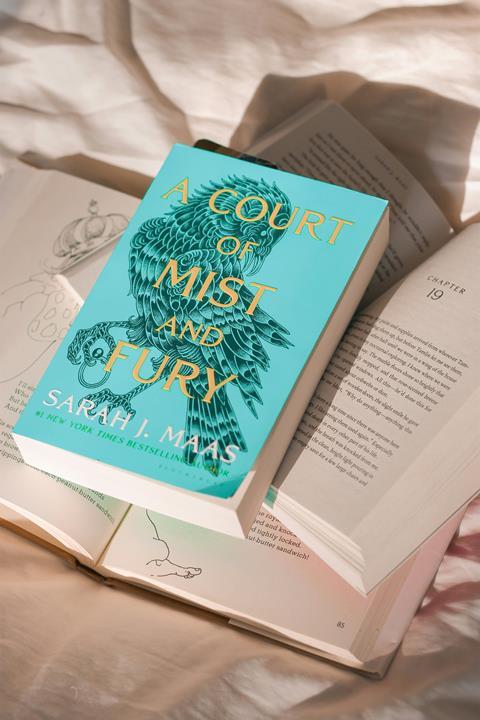
Once upon a time, in the not-so-faraway land of BookTok, there arose a striking new genre of literature named “Romantasy” - a hybrid, blending fantasy novels and romance. Series such as Fourth Wing, A Court of Thorns and Roses (or AOCTAR) and others that blend fantasy elements such as dragons, fae and powerful magic with epic, emotionally complex love stories have captivated the imaginations of women everywhere. Such books continue to conquer the bestseller lists, and the social media-driven community of romantasty fans are zealous, bordering on manic, in their support.
Okay, you caught me. I am a conflicted fan. I first encountered AOCTAR in 2020, and as a lifelong hopeless romantic and fantasy nerd, discovering a combination of these two things with twisting plots was almost life-changing. I quickly delved into the genre only to realise that not all romantasy books are created equal, but they do have one consistent characteristic: the inclusion of “spice”. Otherwise known as smut.
READ MORE: Faith lessons from literature - The Secret Garden
Erotic romance is nothing new. Think of Fabio Lanzio’s flowing blonde hair and glossy chest on trashy beach reads from the 80s. The scandalous and sultry have always had meteotic success amongst female readers. It’s simply that now it has a new form, usually one of a black-haired, winged Fae with dark magic and grey morals.
While the novels of Jilly Cooper, Jackie Collins and others were always blatantly seen as “soft core” pornography material, romantasy books present something different.
While the novels of Jilly Cooper, Jackie Collins and others were always blatantly seen as “soft core” pornography material, romantasy books present something different. The quality of the writing, the world-building and characters that are emotionally complex, often going on deep inner journeys, make it much more difficult to outrightly define this as porn. The sex and “spice” are so geared towards the overarching plot of the heroine finding her power (along with her pleasure) that it feels like a legitimising source of empowerment for many women. It’s not dirty and depraved and involving real people like that internet porn thing. No one is getting hurt, so what’s the problem?
READ MORE: ‘Reading is a kind of magic’
As I have learned working at The Naked Truth Project, the problem is that most people’s definition of porn is too narrow.
Well, as I have learned working at The Naked Truth Project, the problem is that most people’s definition of porn is too narrow. The Collins English Dictionary defines pornography as: “Pornography refers to books, magazines, and films that are designed to cause sexual excitement by showing or describing sexual acts.”
As happens with a limited definition, the damaging effects sneak in like a thief in the night and are taking more than we realise. Internet porn sets unattainable standards for female bodies, shows unrealistic expectations of sex and intimacy and serves as an addictive form of escapism. Romantasty sets unattainable standards for male partners, writes literal fantastical sex scenes and provides escapism to entire otherworlds. And let’s not forget the added factor of emotional investment, a danger that is not found amongst users of “regular” pornography. BookTok promotes “book boyfriends”, makes jokes about wives getting their husbands to act out scenes from their favourite book, yet no concerns are being raised that perhaps this might border on emotional cheating. Women don’t want their partners fantasising about the women they might see on PornHub, but how would men feel about their partners swooning over utterly fictional warrior males who are impossibly perfect?
READ MORE: Faith running in the family - a tribute to Joanna Trollope
The clinical definition alone raises the most uncomfortable questions about this content. Yet as Christian women, we know we have an even higher standard. That we are called to “Flee from all forms of sexual immorality. Every sin that a man does is outside the body, but he who commits sexual immorality sins against his own body.” (1 Corinthians 6:18).
Quests, heroines and dragons aside, romantasty depends on explicit content at the end of the day. It is a central driving force to the narrative and a worldly (in fact otherworldly) depiction of sex, intimacy and desire that, if left unexamined, caused damage to our real-life relationships and our spiritual life. What has our attention has our hearts and ultimately forms our worldview. How can we dwell on all that is good, pleasing, and holy if our time, energy and imagination are being polluted with the smut?
As it says in 1 Thessalonians 4:7 “For God’s call on our lives is not to a life of compromise and perversion but to a life surrounded in holiness.” The holy realities of God are far richer, deeper and more rewarding than anything romantasty could hope to offer.
























1 Reader's comment