







As the government proposes a social media ban for under-16s, writer Becky Hunter Kelm explores the debate over whether restrictions alone can keep children safe online. As a mum herself, she argues that education must go hand in hand with any ban.
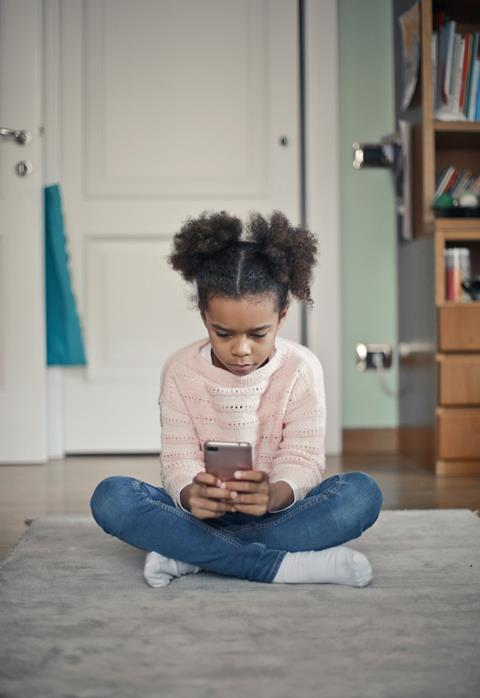
On Monday, 15 June, the Prime Minister announced a new law banning social media for under-16s. Keir Starmer explained that if this bill passes through Parliament, the ban will be in effect by next spring (2027). The ban will affect platforms such as Snapchat, TikTok, YouTube, Instagram, Facebook, and X, but not messaging applications such as WhatsApp or Signal.
On Monday, my own social media feed was full of people and organisations praising the move, such as the movement Smartphone Free Childhood, which stated: “This is an extraordinary moment for children and families across the UK. For years, parents have been fighting a losing battle as social media becomes an ever bigger part of childhood. Today is a turning point.”
As a Christian mum living outside of the UK, I have chosen not to give my son a smartphone.
As a Christian mum living outside of the UK, I have chosen not to give my son a smartphone. When I told him about the UK ban, he said: “Good! I wish they would ban it here. Those kids are lucky.”
READ MORE: Social media brought me to faith, but it can also be used to harm
Other responses from teenagers in the UK haven’t been so favourable, however. One girl said she thinks it should be up to parents to decide if their children are mature enough to handle social media. Another girl agreed with the ban, saying it’s good that the government has done something rather than nothing because of the “negative impact social media has had on this generation”, citing the dangers and effects of social media use, such as doom-scrolling, shortened attention spans, and children seeing things they shouldn’t be seeing. She also pointed out that parents aren’t aware of much of what their children are seeing on their phones, so leaving it to parents to decide hasn’t proved a viable option.
READ MORE: ‘I am a pastor’s wife and have struggled with depression, so I decided to use social media to encourage those who also are feeling weak.’
Northern Ireland’s Education Minister praised the move, stating that it was a “profound” change and that it was “almost like a warzone in some houses to try and control the amount of access our young people have to mobile phone technology.” (Paul Givan)
On the other hand, the Office of the Children’s Commissioner for Jersey has criticised the UK government’s proposed ban, claiming it won’t achieve its objective of keeping children safe online. Dr Carmel Corrigan argues that the ban places too much responsibility on families and that social media companies should be pressured to make their platforms safer, a valid point.
As a mum of three boys, I think the ban is a positive thing. It puts children and teenagers on an even playing field when it comes to smartphone use and social media. My son’s best friend is on his smartphone 24/7, and my son watches over his shoulder, and there’s not much I can do about it when he’s over at his house, so a ban like this would be a relief for me – and, I think, deep down, for the children.
READ MORE: I quit social media when the Holy Spirit revealed the damaging way I interacted with it
And the thing is, if you’re 15 and your way to connect with your mates and have a laugh is on Snapchat, yes, it’s going to be hard to give that up. It could take a while to wean off the dopamine addiction caused by social media use (that, by the way, young brains are not designed to handle). But just because something is hard doesn’t mean it’s wrong. Loving discipline is hard, but it’s for our good.
Of course, this ban will face pushback from teens, but I hope that, for some, it will bring a sense of relief because they can escape the constant comparisons and popularity competition online. Finally, children have a safety net and can say, “Well, this is the law, and everyone else has to stick to it too.” I also think it will be a relief for parents who, in reality, cannot police what their kids are looking at on their phones.
I also think the ban, on its own, isn’t enough to achieve the intended positive impact on children’s safety and wellbeing.
I also think the ban, on its own, isn’t enough to achieve the intended positive impact on children’s safety and wellbeing. It’s no good just taking away social media without giving a reason. That’s like when I say, “Because I said so,” to my child when I set a new boundary. It doesn’t work, and they’ll just do it anyway. As is the case here, teenagers are tech-savvy, and I agree with many who have pointed out that the ban will just push teenagers underground with their internet use. They’ll find a way around it and use social media regardless.
While Prime Minister Sir Keir Starmer argues the ban will help protect children from bullying, addiction, and poor mental health, critics say it does not address the deeper cultural and social pressures to be liked, followed, and approved of that young people face online. The key to changing this is education. It’s time we taught our children and young people about the damage social media can cause to adolescent minds. What if the government, and the Church, focused on education alongside this ban? Social media isn’t going anywhere, and one day, when these kids turn 16, they’ll be back, scrolling away.
So this is a crucial opportunity to teach children about the impact of online identities on their childhood. We must teach them, biologically, why their brains cannot cope with dopamine addiction and how online affirmation (or bullying) can significantly impact their mental health. Let’s have school curricula address how capitalism has led social media companies to market these platforms to children for one reason alone: profit. Imagine if this generation stood up to them. If they could campaign and effect change. Because their young voices will be far more powerful than ours or any government’s.
I think this ban is much needed, but it shouldn’t be a stand-alone measure. If you’re a teacher, youth leader, or school leader, it’s time to rise up and empower the kids in front of you so they understand the why behind this ban.


When does respect become complicity? What the Eiffel Tower’s ‘Invisible Women’ row can teach Christians

The Swiss tourist who crossed the line: What Christians need to know before visiting a Muslim country

Why Hayden Panettiere had her daughter baptised in Ukraine – and what she said about the ‘incredible’ Christian moment

















No comments yet