







Hope Bonarcher was deleted without warning from Instagram – here she reminds us that, while our online identity is fragile, our true identity is found elsewhere
Somewhere in the climax of 20th Century Studios’ The Devil Wears Prada 2, the film’s central tension crystallises in a charged exchange between its antiheroine, Miranda Priestly, and tech billionaire Benji Barnes. Meryl Streep’s fashion empress, draped in iridescent, jewel-encrusted Armani Privè so stunning my jaw practically dropped into my popcorn bucket, fights for all that is beautiful, artistic and distinctly human in fashion. “Commitment to beauty, artistry, the best in human achievement maybe?” she argues, defending Runway, the magazine she has lived, breathed and sacrificed for. Across from her, Justin Theroux’s Benji answers with the smug fatalism only billions of dollars can buy: “The world is about to change. That’s what human beings don’t understand…One day it’s just gonna come and it’s gonna smother us all. Maybe that’s the way it has to be.”
Being digitally duplicated – or even erased
The narrative of The Devil Wears Prada 2 feels more than merely relevant; it carries a distinctly bittersweet resonance for many of us living through the technological revolution reshaping modern life. By now, we are all familiar with the language of ‘modernising’, ‘digitising’, ‘downsizing’ and ‘streamlining’. Entire industries and identities are being reconfigured in real time. Even people who once appeared untouchable by ordinary instability – the Miranda Priestlys of this brave new world – are discovering they are not immune.
Our ultimate identity was never meant to rest securely in public approval, online visibility or digital permanence in the first place
Recently, supermodel Paulina Porizkova, the face of Estée Lauder from the 1980s through to today, posted on Instagram describing how her likeness had been captured and repurposed by AI to promote views that are not her own. “This fake AI that is mostly built on my image seems to have the same rights as I do on Instagram because she is not impersonating me…she is an AI built on the way I look, but she’s not actually me, so that makes it OK and it doesn’t violate any rules,” she explained in a video shared in May, thanking followers who reported the account. She continued, warning that if someone appearing to be you begins “spouting racist bull crap,” there may be little recourse at all. If a woman who has earned millions through her image and public identity can find herself digitally replicated and powerless to stop it, what hope does that leave for ordinary people like you and me?
That unsettling sense of digital disposability became unexpectedly personal for me in April, when my own author page, @hopebonarcher, was abruptly deleted by Instagram. Little old me, with my modest 730-plus followers – and no, I am not forgetting a few zeroes – posting largely Christian, conservative and free speech-oriented content: no swearing, no nudity, no violence, just plainspoken commentary. One morning I opened the app I probably used more than any other, only to be met with a black screen warning me that my account was “in danger” of deletion. When I clicked the convenient “dispute here” button, I was given no explanation for the charges against me, no visible violation, no meaningful opportunity to respond – only a dead page and a vanished username. Today, if you search the name I created nearly four years ago, it is as though it never existed at all. The only remaining trace is that nobody else can claim it. So
@hopebonarcher has effectively been erased from Instagram’s world.
I have spoken very little about the deletion since it happened. In one sense it feels trivial, yet emotionally it carried a strangely disproportionate weight. There is an odd shame attached to being digitally rejected, as though your contribution to the vast online conversation was so objectionable it had to be removed altogether. Over time, I had slowly built that account into a small archive of thoughts, poems, opinions, articles, photographs, prayers, conversations and fragments of daily life. Then suddenly, without warning or explanation, it was gone. What surprised me most was not my anger but my silence. I assumed that after submitting the appeal email Instagram requested – an appeal they neither acknowledged nor answered – I would emerge with my journalistic guns blazing. Instead, I said almost nothing.
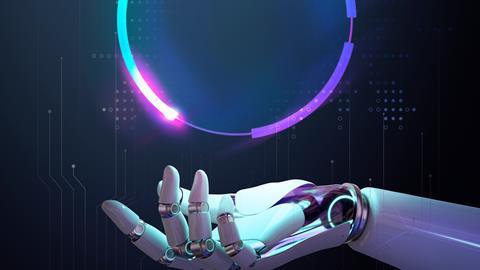
Perhaps that silence is part of the point. How does one meaningfully respond when a portion of their public identity disappears overnight? Social media platforms encourage us to invest ourselves deeply into digital spaces while simultaneously reminding us how fragile our place within them truly is. One algorithmic decision, one unexplained moderation action, one faceless automated process and years of accumulated presence can simply vanish. In a world increasingly shaped by AI, technological control, manipulation and cancellation, the deeper question for Christians becomes unavoidable: how do we respond when the future feels unstable, impersonal and increasingly beyond our control?
Where our true calling and identity lie
For me, the first response was surprisingly simple: I deleted Instagram entirely for at time. Instead of obsessively refreshing appeals that would likely never be answered, I returned to my daily prayer walks, seeking God in the uncertainty rather than demanding immediate clarity from it. Living here in Scotland, surrounded by endless pastureland and rolling hills, I found my thoughts continually returning to Psalm 23. We often think of that psalm primarily in terms of David, yet the true focus is the Shepherd Himself. He makes me lie down. He leads. He restores. He accompanies. He comforts. He prepares. He anoints. In seasons of rejection and instability, while the world around us grows louder, stranger and more technologically untethered, the calling of the sheep remains remarkably uncomplicated. Walk. Trust. Abide.
That does not mean the surrounding uncertainties suddenly disappear. AI will continue advancing. Technology will continue reshaping industries, identities and human relationships in ways none of us fully understand. Platforms will continue wielding extraordinary power over public discourse and personal visibility. Yet Christians are reminded that our ultimate identity was never meant to rest securely in public approval, online visibility or digital permanence in the first place. The Shepherd still sees to His flock. He still provides, still leads, still restores. In a world obsessed with reinvention and artificiality, there remains something profoundly steady about belonging to Christ. The Devil may wear Prada, but the believer gets to put on Christ.



















No comments yet