







At an Arts and Mission conference in Tokyo, writer Rachel Mataraki found herself considering the role of Christian artists working beyond church walls. She explores whether films, stories, and creative works can bear witness to God’s truth even when His name is never spoken.
I was recently part of an Arts and Mission conference in Tokyo. There were tea masters, evangelists, worship leaders, filmmakers, and artists. I found myself wondering: what about creative believers working in the marketplace, the designer at Paris Fashion Week or the filmmaker who wants to reach a wide and diverse audience?
These questions matter because they sit right at the intersection of faith, creativity, and everyday life. We may be familiar with shows such as The Chosen and others that depict Jesus or Bible stories, but what about stories that are messier or more shocking?
READ MORE: God’s design for healing? Creativity
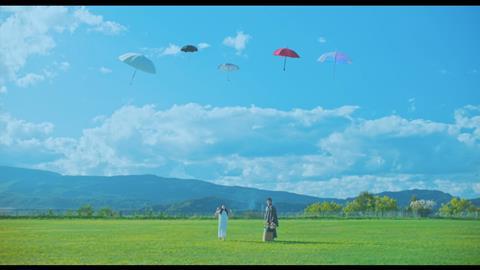
In a Q&A with Japanese film director Yu Shibuya, he shared that when making his film An Umbrella for Miharu, he wanted to show “real life” in a way that was authentic to lived experience. His film, a delicate and beautiful portrayal of an autistic girl and her family dealing with grief, includes scenes depicting traditional Japanese rituals in a temple, raunchy haikus, and drunken fishermen.
READ MORE: DAVID: A movie 30 years in the making
The film tenderly explores love, loss, coming of age, reconciliation, and forgiveness, experiences that are both deeply human and profoundly Christian.
The film tenderly explores love, loss, coming of age, reconciliation, and forgiveness, experiences that are both deeply human and profoundly Christian. Many stories that move us deeply are not explicitly religious. Yet they explore realities that sit at the centre of the Christian understanding of the human condition and redemption. Jesus Himself shared parables that reflected the daily experiences of His audience. To us, they sound sacred, but to the people of the time they were new, fresh, relatable, and even disruptive.
Read the Psalms and you will encounter the raw emotions of despair, anger, and fear. Yet these experiences all point back to our need for God to be Immanuel, “God with us” in the midst of them. Perhaps the question is less, Is this Christian? and more, What does it point to? Historically, Christians have wrestled with representation. The tabernacle and temple themselves were commissioned with extraordinary artistic detail, woven fabrics, goldwork, music, and craftsmanship entrusted to skilled artisans. Yet during the Reformation, much religious art was destroyed.
READ MORE: This Christian Rom-Com has everyone talking — but is it sending the wrong message?
The word behold carries the sense of drawing attention to something, a prophetic act in the Hebrew understanding.
The word behold carries the sense of drawing attention to something, a prophetic act in the Hebrew understanding. In that sense, what we behold, and what we create, points people toward something. This can either nourish our faith or diminish it. The contrast in Psalm 115 is striking: idols that cannot speak or see are set against the living God. Psalm 115:4–8: “Their idols… have mouths, but cannot speak; eyes, but cannot see… Those who make them will be like them, and so will all who trust in them.”
In that sense, it does matter what we watch, what we absorb, and what we create. Yet the sacred-secular divide was challenged by Jesus. He ate with sinners, allowed a woman to anoint His feet with oil, healed on the Sabbath, and told stories in which outsiders became heroes, such as the Good Samaritan.
Some are called to create within the church, but many are called into the marketplace, film, design, music, writing, where creativity can still carry spiritual significance without explicitly naming it. Yu stated, “Creativity flows from the creator’s heart, so if it is connected to God, then redemptive themes will naturally emerge.” As believers, we carry God’s Spirit within us. The deeper question may be whether we remain connected to Jesus in what we behold, create, and absorb.






















No comments yet