






Jemimah Wright spoke with Catherine Grant, co-founder of The Entertainer, to hear the remarkable story of a childhood marked by hardship, caring responsibilities and loss. From leaving school at 13 to helping build one of Britain’s best-known toy retailers, Catherine reflects on the faith that has sustained her through every chapter of her life.
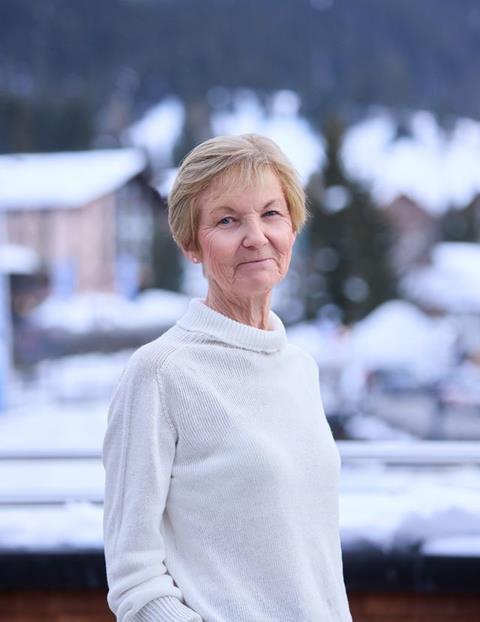
I was born in Bristol, the fourth child in a family of five children. My father worked as a baker at the time. An ambitious man, he was forever looking for new challenges, hence we moved from place to place throughout our childhood. My mother was born in Blagdon, a village about fifteen miles from Bristol. She was very much a country girl, going into service at the age of fourteen before working in her stepmother’s café in Blagdon. My father worked on the buses, coming into the café most days. He must have seemed a very exciting young charmer, and at the age of seventeen she eloped with him to Bristol.
Though Bristol was always the centre we gravitated back to, my irresponsible father was happy to move on anywhere he felt like. He became a master baker, and bakery jobs always came with accommodation. Once he became bored, or felt ill-used, we were off again. When I was three or four we found ourselves in Luton, Bedfordshire, and it’s the first memory I have of watching my mother crawl upstairs on her hands and knees. This was the beginning of her multiple sclerosis.
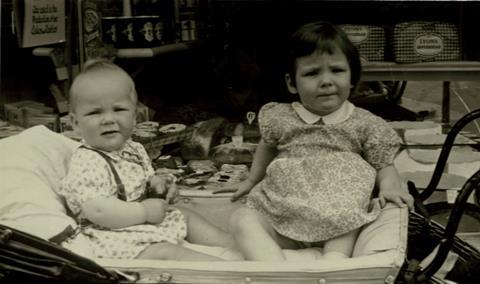
By the age of twelve, I had already been to three different secondary schools. By the time I was thirteen, my mother was in a wheelchair and I was her main carer, getting the family dinner after school, looking after the house and putting her to bed. My geography teacher commented in my school report: “Catherine is idle.” I remember the feeling of injustice.
My mother’s condition deteriorated, the authorities moved us into adapted social housing, and my father took me out of school to care for her full-time. She died in 1969. I was so hopeful I could return to school, but a week after her funeral my father moved us to a tiny hamlet in Hampshire where there was no school.
Teachers have been really important in my life. Having lost two years of schooling, it was recommended I start an A-level pre-nursing course at technical college. Though I missed four months when my father moved us to Wiltshire, I still achieved enough to apply to Great Ormond Street Hospital. My lovely psychology lecturer bought me the train ticket for the interview, or I could not have gone. My father would never have encouraged it.
Growing up, though I knew there was a God, we were never in one place long enough to go to church. During those two years of caring for my mother, I was completely isolated at home. I remember standing in the bedroom I shared with my sister, probably a few months before my mother died, thinking: “God, if you’re really there, please see what is happening and help me.” I recall exactly where I was standing.
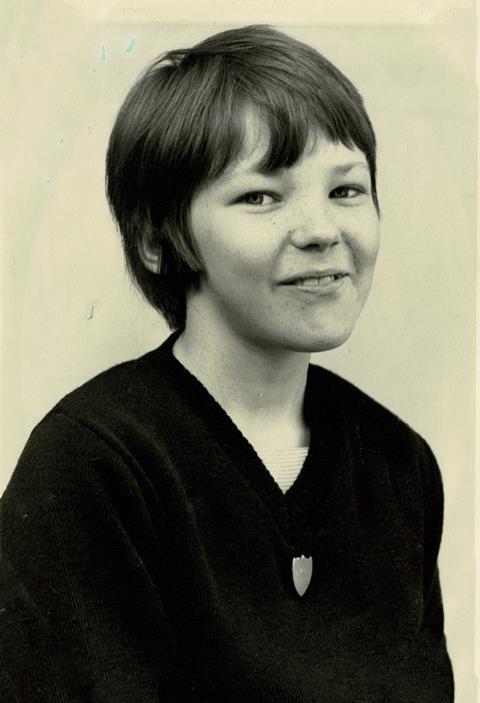
During my time at Great Ormond Street, I had a very good friend who is a strong Christian. She took me to meetings, and we helped a charity working with the homeless on the streets of London. That showed me what Christianity looked like in practice. She and I are still great friends. In later years, I shared a flat with a girl from Amersham, which is how I met Gary. I wouldn’t say it was love at first sight, but there was a recognition of mutual struggle and resilience. Within ten weeks we knew we would be married, which happened in 1979.
I had two children and was pregnant with our third when a very dear friend invited me to her church to hear a guest speaker, David Pytches. He was such an amazing man. I was first up for him to pray for me, and I felt the power of the Holy Spirit for the first time. It was the beginning of fully understanding who Jesus is.
A significant moment that has stayed with me happened while I was driving through a country lane near home. A pair of old trainers lay in the road, and in that quiet moment I felt a sense of God speaking to me. It wasn’t an audible voice, but an instant thought: I was walking a very different path from the one I was born into. I sensed a calling in that. I could, in some way, understand what it is to stand in someone else’s shoes. That quiet moment of revelation has stayed with me.
We have four children, all married with families of their own. I have ten grandchildren, aged from a few months to almost twenty, and it’s a joy and a privilege that they all live close enough to share the ordinary moments of their lives.
Married for just a few years, Gary lost his job and I became the main breadwinner. I was a health visitor. When the local toy shop came on the market, with the backing of the bank we bought it. I came up with the name and The Entertainer was born. We couldn’t have known how significant a business it would become. Our two oldest sons joined the company in later years and brought their skills, energy and innovation, expanding the number of stores in the UK and establishing franchise partners globally. We also became the supplier of toys to major UK retailers. While we owned the business, 10 per cent of profits were donated to charity each year. Believing in the importance of family life, we closed our stores on Sundays so our staff could spend the day with family and friends.
Early last year, we decided as a family to transfer all our shares into an Employee Ownership Trust. It’s felt a bit like giving our first baby away. A family business is a precious thing, and it’s strange to send it out into the world!
Restore Hope Latimer was founded by two friends and us in 2002. It sits in a valley of 365 acres of farmland, woods and fields, with an eight-acre lake and a chalk stream. Imagine this as a place where children and families come to play, experience nature, and take part in activity days, toddler groups and parenting courses, which I facilitate. One of the most powerful things I’ve learned is that, in order to bring about change in their lives, people need an ally. Transformation rarely happens alone. It happens because someone chooses to stand alongside and believe in a person when they cannot yet believe in themselves, walking with them until they can stand on their own. Redemption, it seems to me, is about giving people space to find their voice. If we don’t, the stories of struggle remain hidden, shame settles on a family and nothing changes.
Writing my mother’s memoir became part of making sense of my own story.
Writing my mother’s memoir became part of making sense of my own story. I am very close to my two sisters. They are the knowledge keepers, remembering much more of our history than I do. Over time, the memoir became something much more purposeful, giving us a forum to bring into the light the things that happened to us. It’s also a story of redemption. It has brought healing across the generations and an understanding of who our mother was, though she died so very long ago. Indeed, one of my granddaughters has been named after her.
My faith has been a constant support to me. Though I’ve seen both suffering and grace, I’ve still felt the hand of God in moments of trauma and deep grief. I don’t believe hardship results from a lack of faith. Life is complex. Bad things happen.
My husband was brought to the Lord by the amazing Barry Kissell, and though Barry is now with the Lord, his wife, Mary, is a precious friend. She recently encouraged me with this verse, 1 Kings 8:56: “Not one word has failed of all the promises the Lord gave.” It’s a reminder that through everything, even when life has felt unstable or uncertain, God’s promises never fail.
Catherine’s book, Wheeling Through Sand, is available online from St Andrew’s Bookshop and Waterstones.























No comments yet